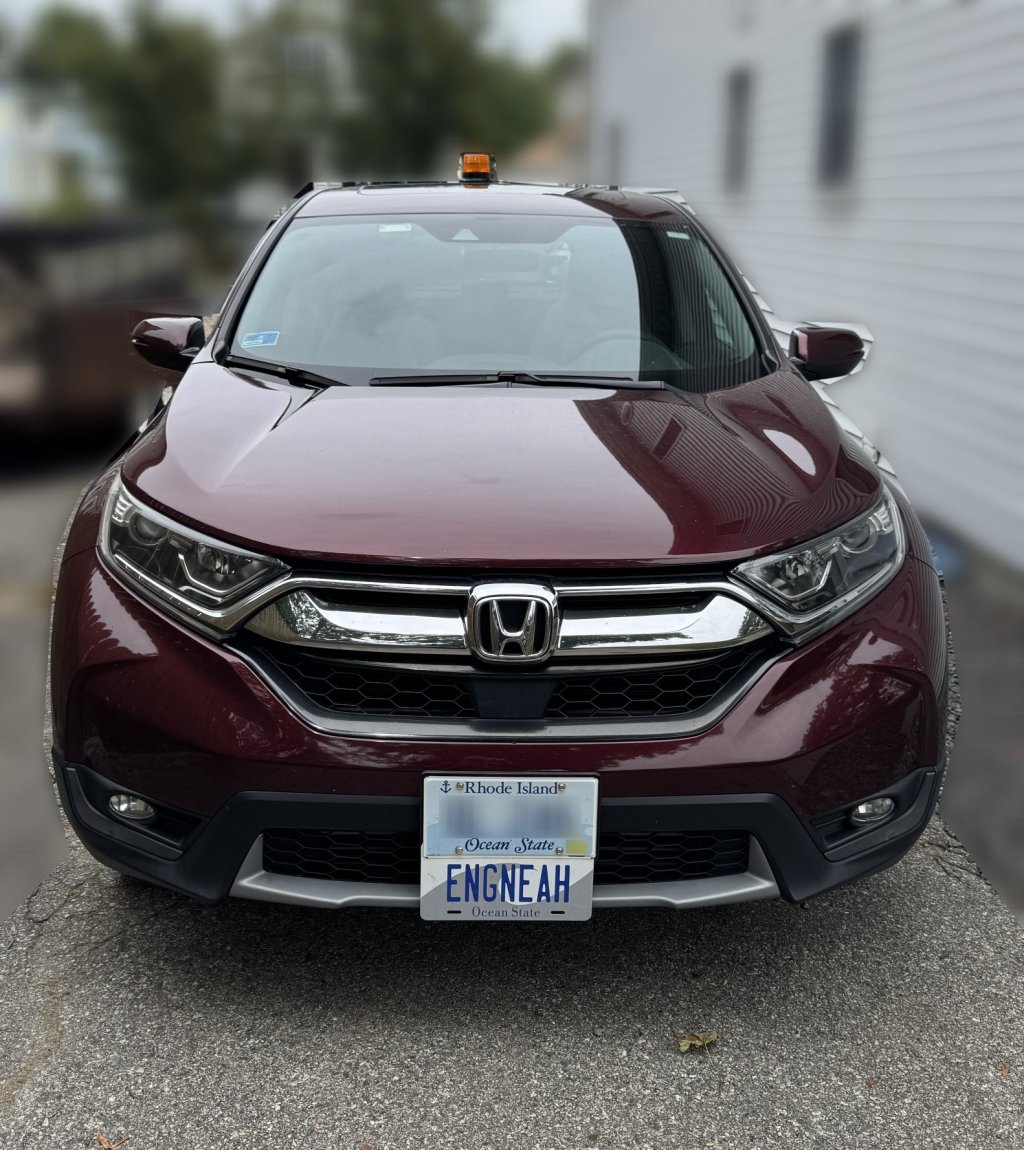
Like many of my brethren, your intrepid engineer has a long history of being something of a packrat. And part of that is having a car full of, well, stuff. Mostly tools, but also just random parts and supplies that came in handy. This got important after I became Chief Engineer of The Public’s Radio (WNPN 89.3FM) and was routinely driving to over a dozen locations (transmitter sites, remote news bureaus, and STL relay points) all over the state of Rhode Island and the Southcoast of Massachusetts.
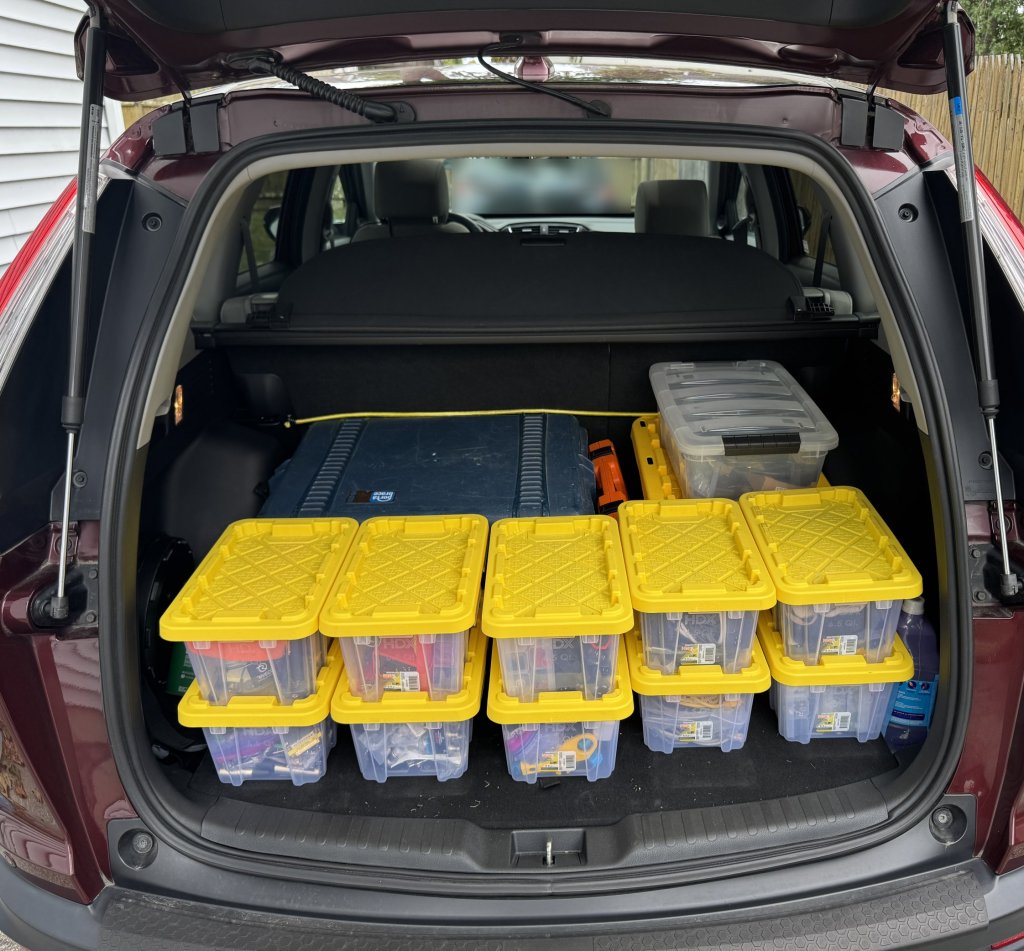
When I started working for L&R full-time, I wanted to organize things better. Partly because the work demanded it, but also because I wanted to be able to take all that stuff out of my Honda CR-V quickly and easily when I was at a job site. Or needed to clear out room for something bigger. Or when one needs to get to the spare tire! So here’s what I did!
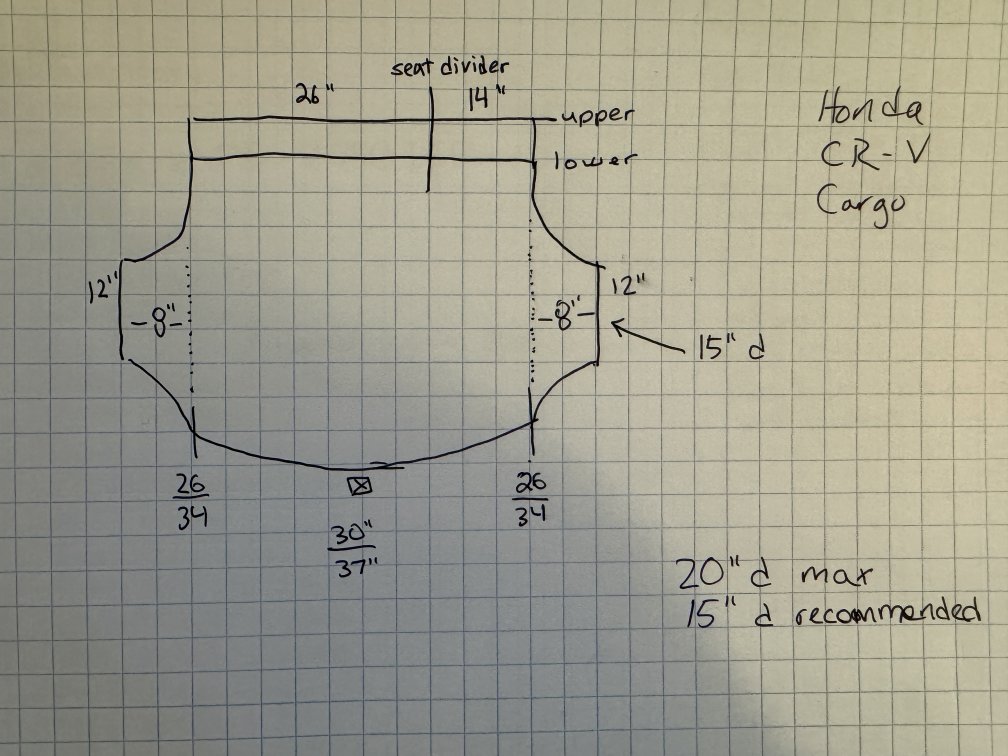
Mind you, this was originally for a 2014 Honda CR-V LX and now is for a 2019 Honda CR-V EX. By definition this won’t work as well for you if you have a car with differing rear cargo space. Below is a slightly crude diagram I drew, since Honda does not provide the information. Measurements are slightly conservative to make sure that if you use them, you’ll have sufficient room for the cases/bins that I used. Also, I wanted to ensure this would all fit with the rear seats in the normal (not folded-down) position, and the retractable cargo cover in place. There’s a lot of pricey stuff here; it does not pay to advertise it to thieves!
The Big Box in the Back
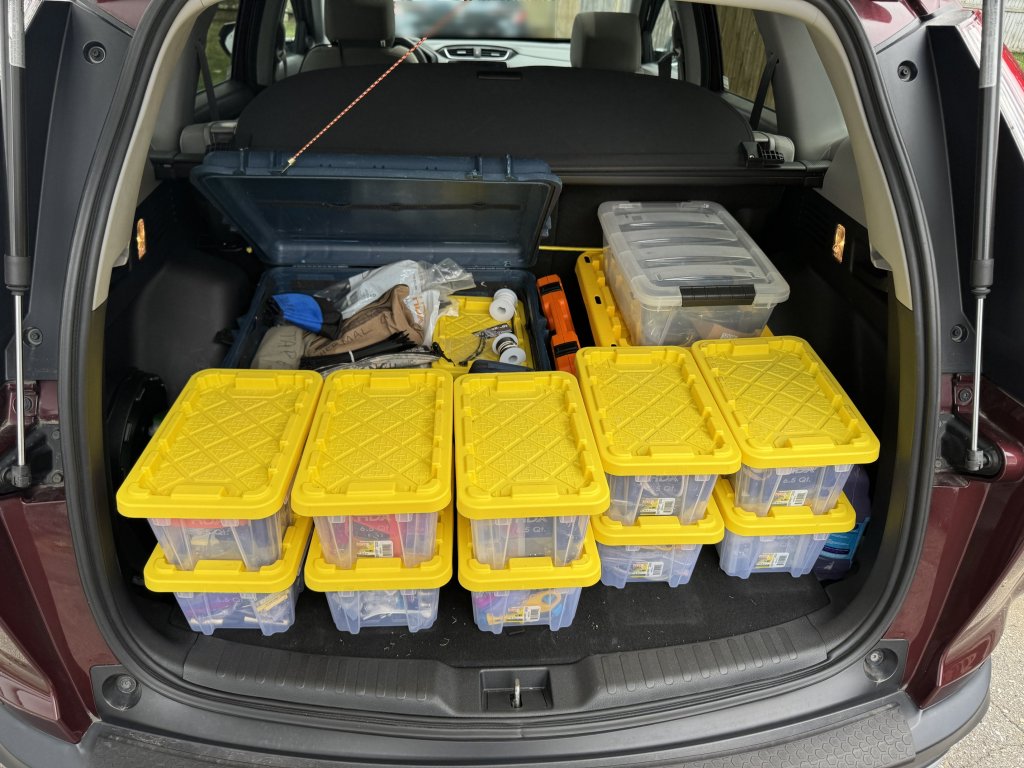
The large dark blue flight case in the left-rear is a PortaBrace PB-2750EP, with the built-in roller wheels and extendable handle. Very handy because this is my primary tool-carrier, and it gets pretty heavy. Inside I have everything divided into canvas pouches/bags or a device’s own container. Where possible, I’ve linked to the specific examples.
- Ryobi suction-cup laser level (I have one of these, too)
- USB adapters of varying types: power, NIC’s, conversions, etc.
- Hand wrenches, esp. ratchet wrenches.
- Socket wrenches.
- Plastic zip-ties (a huge variety of them).
- Solid-core 14AWG wire (more durable than a ziptie).
- Thermal Camera (HSFtools HF96)
- Measuring tools: tape measure, laser tape measure, cloth tape measure, etc.
- Tape: electrical (different colors), rubber electrical, silicone sealing, mastic, etc.
- Screwdrivers & bits.
- Jewelers screwdrivers.
- Multimeter.
- Pliers & Cutters (e.g. wirecutters, box cutters, etc).
- Latex gloves. (very handy at keeping your hands clean at sites with no running water to wash afterwards)
- Dremel engraving tool & bits.
- Hex/Allen keys.
- Dymo Rhino 4200‘s spare AA batteries & spare label cartridges. (I keep the actuall labelmaker elsewhere that’s more accessible.)
- Misc tools bucket: shears (big, hefty scissors for metal), various wire strippers, extra-large wirecutter, cable & wire crimpters, paintbrush (for dusting purposes), etc.
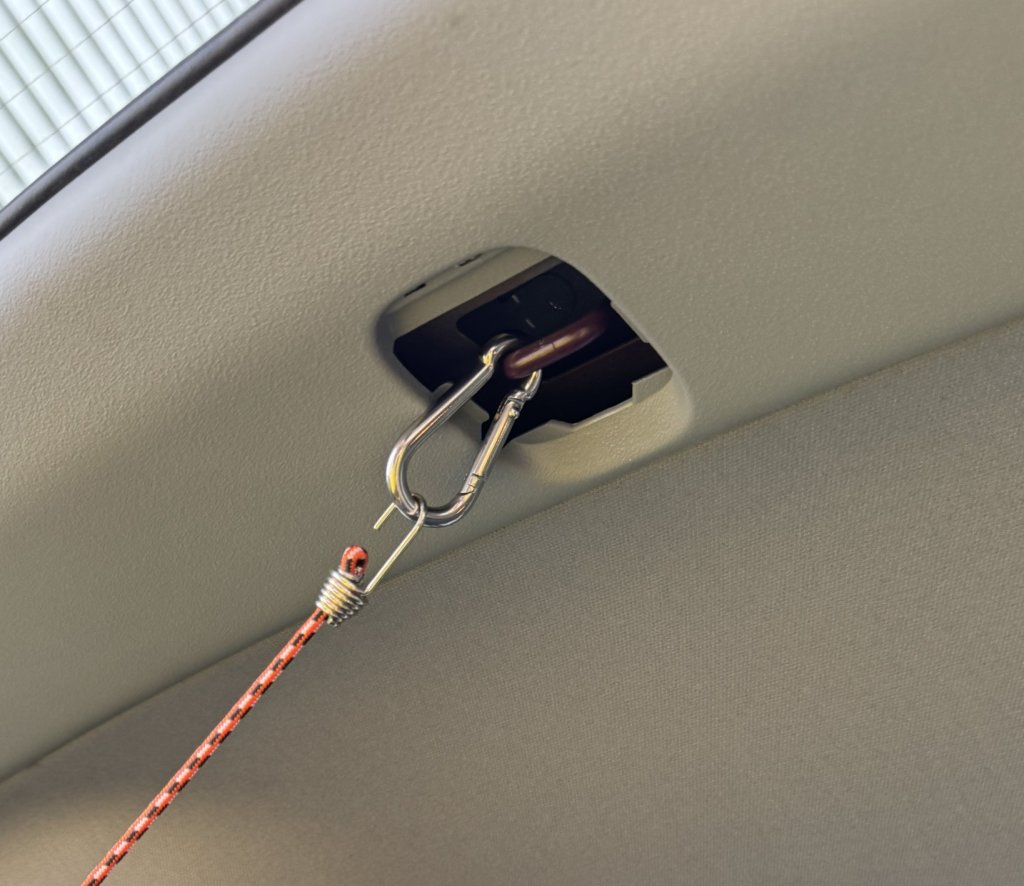
Also note that CR-V’s have an attachment point in the ceiling just inside the rear hatch. I think they’re for baby car seats. I leave a small-ish carabiner in there (it’s not very noticeable in the rearview mirror) and keep a bungie cord handy so I can hook the PortaBrace case’s lid to it. Because it’s a lot easier to dig around in the case when you have two hands to do it!
Keeping Liquids & Sprays Contained
In the upper-right is an HDX 7G bin. This I use for certain supplies I routinely need, especially liquids or spray cans:
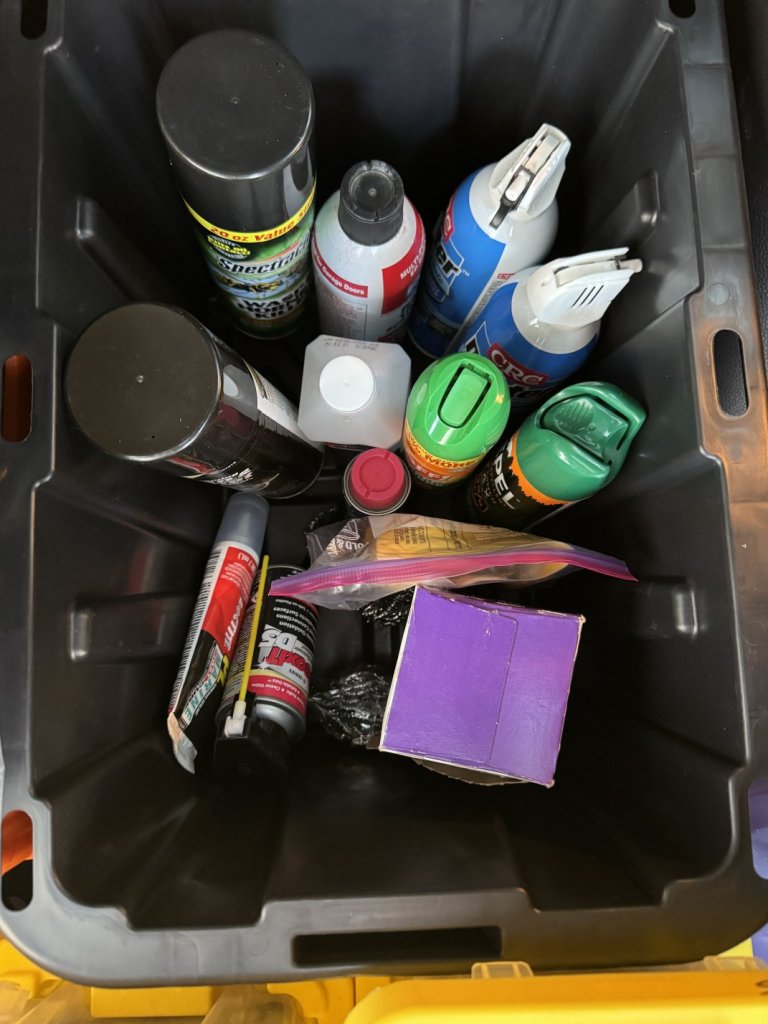
- Raid Wasp/Hornet Spray. Because I live in a region with a lot of yellowjackets (nasty critters!) and bald-faced hornets. (VERY nasty critters!)
- Deep Woods OFF! bug spray. The kind with extra DEET for ticks.
- WD40 oil lubricant (mini can).
- Compressed air cans.
- Rubbing alcohol (70 or 90%).
- DeOxit DS5 contact cleaner spray.
- Mint-scented anti-mouse pouches. I don’t know if these things really “work”, but they do seem to help.
- Garbage bags. Usually 13gal and/or “tall kitchen” bags.
- Tomcat mouse bait/poison traps. These are a necessity no matter how well you seal up your facility, because you can quickly and easily see if they’ve been nibbled…indicating mice are still getting in.
- Frost King 3/16in thick foam air filters. A lot of my sites have Nautel VS & VX transmitters. These are perfect replacements for the front-side air filters; just cut to fit.
- Lucas “Red & Tacky” No.2 anti-seize grease. I try to put a dab of this on the threads of any bolt that’s staying outdoors, and screw the nuts over it for even distribution. Stainless steel is notorious for seizing regardless, but this does seem to help.
On top of the HDX 7G bin is a generic clear plastic bin with a locking lid, about 14 x 8 x 5 in (L x W x D) that’s where I put anything I know will be going to a remote site when I next “make the rounds” to go there. Small parts, filters, adapters, wires, etc – all go in here to stay together. I make it habit to always open the bin every time I go to any site…regardless of which client’s site it is…so I always have eyes on the stuff in there to refresh my memory.
Bring On the Bins!
Next up are the ten HDX 6.5qt bins! These hold the bulk of my “parts” and “supplies.” Each is clear plastic for easier viewing.
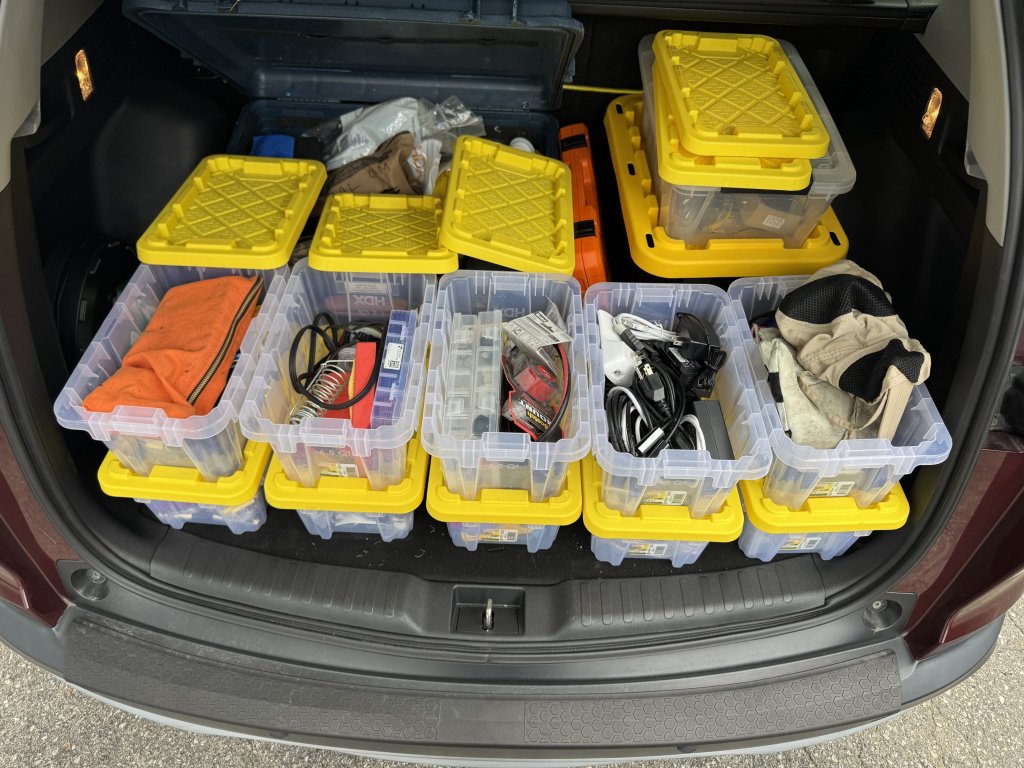
BIN 1 = FAST ACCESS. Items I am routinely using and want to keep close for fast and easy access.
- Dymo Rhino 4200 labelmaker. Plus one 18489 nylon cartridge (wires/cables) & one 18445 vinyl cartridge (flat surfaces).
- Centech non-contact pocket thermometer. I don’t think they sell these handy little buggers anymore, but you can get laser thermometers cheap from anywhere now. I use them primarily to measure the output tech of air conditioners to verify proper operation.
- 12in straight edge plastic ruler.
- Tecsun PL-380 radio receiver. One of the best portable radios out there, and inexpensive, too!
- Earbud headphones & (several) 3.5mm to 1/4in TRS adapters. For when the site has “lost” its headphones.
- Mini bubble levels. These aren’t good enough for real levelling work…for that you need something more like this…but they’re sufficient for a quick test.
- Generic “leatherman” style multitool.
- Paper clips (for reaching that elusive reset button that’s deeeeeep inside the chassis).
- Double-ended powered screwdriver bit (phillips & flathead)
- “Greenie” mini screwdriver.
- Post-It notes. Both normal- and mini-sized. Perfect for quick labelling work on jobs-in-progress.
BIN 2 = SOLDERING KIT. I like to have something a bit more robust than just a regular 40W iron in a bag.
- Weller WLC100 soldering station. Note: I keep a couple bottles of water in my car at all times, too. Partly to drink when thirsty, but also to rinse something off, or to soak the iron sponge in the WLC100.
- Heat shrink kit. Almost anything will do, but I like the multi-colored option.
- Butane lighter. A heat gun is better, but this is a lot more compact.
- Rosin core (lead-free) solder.
- Alligator clip leads.
- Blank piece of metal or wood to solder on. (to protect countertops)
BIN 3 = BATTERIES. Always keep a good stash of batteries with you. I have a plastic parts box so I can keep my batteries separate. I usually stock AA, AAA, 9V and a couple different coin cell batteries. Remember to keep the stash for your gear but also for whatever you typically encounter in the field.
Also in this Bin, mostly because I couldn’t think of where else to put them, are:
- Plastic kit box of twist-on wire nuts/connectors.
- Box of Solder/crimp spade lugs.
- Variety of AC outlet adapters.
BIN 4 = NETWORK & COMPUTER ADAPTERS. Too many times I’ve been at a remote job site when I need a very specific VGA to HDMI adapter to use the “spare LCD monitor” at the site…and I didn’t have it. No longer! I try to keep at least one, preferably two or three of each:
- HDMI to DP (DisplayPort) adapters.
- DP to HDMI.
- DP to VGA.
- HDMI to VGA.
- DVI to VGA.
- DVI to DP (or HDMI).
- USB-C to HDMI.
- DVI, VGA and HDMI cables.
- Various USB adapters & cables.
- TP Link RE220 WAP. Because somethings you really need wifi and the whole network is wired-only.
- TP Link TL-POE150S. PoE injector; good for quick repairs of certain network cameras and/or ethernet radios.
- TP Link TL-SF1005P. 5-port unmanaged (“dumb”) ethernet switch with PoE.
- USB NIC’s, especially the Linksys USB3GIG if you still find them.
BIN 5 = CLOTHING.
- Canvas work gloves.
- Leather work gloves.
- Rubber-coated electrical insulating gloves.
- Foam kneepads.
- Newhatten 1535 safari hat. Has a cover that helps protect your ears and neck from both sunburn and stinging insects / biting flies.
BIN 6 = ADAPTERS.
- StudioHub. I keep a wide variety of StudioHub adapters. Mostly not the dongles; I mean more the stereo/mono adapters, L/R combiners, L/R separators, etc.
- Audio cables/splitters in XLR, 1/4in TRS and 3.5mm TRS.
- TRRS adapters.
- DB9 / DB15 / DB25 to terminal block adapters. Plus gender changers.
BIN 7 = RF CONNECTORS & RELATED.
- NanoVNA. (Vector Network Analyzer) These things are getting cheaper every year! While not really “enough” for detailed measurements, this thing is nevertheless REALLY handy for, let’s say, a fast check if an antenna is mis-tuned.
- Co-ax connector tool kit. (mostly RG6)
- RG6 jumper cables (mostly 1ft or less) with F connectors.
- F connector splitters (from 2 to 6 outputs).
- My “big bucket of RF adapters/splitters” which has all sorts of stuff with N, F, BNC, TNC, SMA, etc connectors. Plus some attenuators (usually F connector) from -3 to -20 dB.
BIN 8 = CAT5 TOOLS. The modern broadcast engineer knows at least half the job is network engineering these days.
- TackLife CT03 CAT5 tracer. I don’t think they make this anymore, but any cable tester with a screech tracer will do. Try the Noyafa NF-801B. Or if you want to get fancy the Noyafa NF-918S also tests fiberoptic cables, too.
- I also keep a stash of cheap CAT5 cable testers handy too. Quicker and easier to use, and a good “confirmation check”. I find they can and do break relatively easily. But they’re so cheap you keep two and toss the bad one when it dies.
- Cable strippers. I have a Klein Tools VDV110-295 and a Platinum Tools 15015C.
- RJ45, et al, wire/connector crimping tool. I have a Platinum Tools 100004C (among others) but you can use whatever you like. My chief recommendations are to get one that can handle EZ RJ45’s, and one that has imprinted on the handle the T568A and, in particular, T568B standard for which color-coded wire goes to which pin. You’ll memorize it with time, but at first it’s nice to have it right there. Or print it out and tape it to the inside the Bin, or laminate it.
- RJ45 connectors. Keep at least 20 in your kit at all times. More is better. I prefer EZ-style, although I know some purists hate them.
- RJ45 female-to-female couplers. You should never rely on a passive coupler indefinitely, and never use them in an outdoor installation. But sometimes a coupler is just what you need to get something done fast.
BIN 9 = CAT5E CABLES. Pretty self-explanatory. Try to keep a stash of one or two (or more) of every cable in 1, 2, 3, 5, 7, 10 and 20ft lengths. Maybe a few 0.5ft as well. Whatever you can reasonably fit in the bin.
BIN 10 = SCREWS, NUTS and BOLTS. I keep six or seven little plastic kit boxes inside the bin to help keep all these things organized.
- M4 to M8 bolts, washers, nuts.
- Variety of nuts and washers.
- Various screws (pan head style), phillips and flathead.
- Various screws (flat head style), phillips and flathead.
- Wood & drywall screws.
- Drywall anchors (mostly the screw-in type)
- Misc related parts, like screw-in eyebolts.
- Floor shims. (for making the rack cabinet level on an uneven floor)
- Rack square cage nuts + the tool to insert/remove them.
Drill Bag
Back in the day, I picked up a DeWalt DCD796 20V cordless hammer drill kit. It came with a charger, and I bought a spare battery (always get a spare!) but it was quickly obvious that the kit bag that came with it was hefty enough to hold some other things, too. So I started keeping a small group of tools that I use all the time in this one bag, because I use that drill a lot, too. It’s also not uncommon that I might toss a couple extra specific tools/parts in the bag for easier transport…but I’m vigilant about putting them back where they belong afterwards.
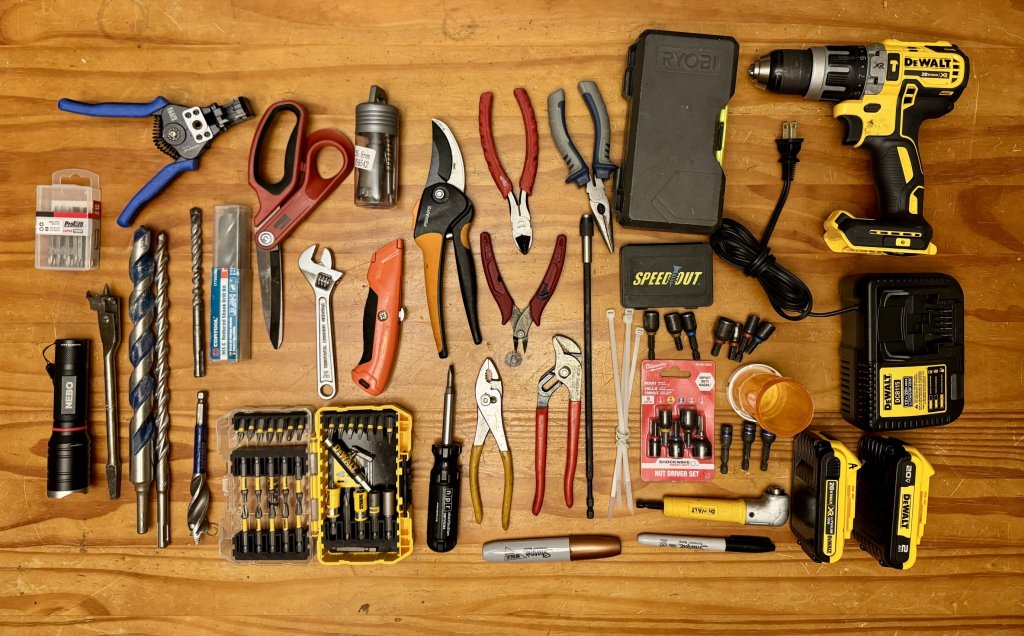
Do be conscious of the fact that all this stuff adds up fast in terms of weight. It can get unconformable to carry very quickly.
- DeWalt DCD796 20V cordless hammer drill.
- DeWalt DCB203 20V battery (plus one spare).
- DeWalt DCB115 battery charger. These batteries last so long, I hardly need to keep this with me, but it’s good practice to do so.
- DeWalt 15in tool bag
- 6 in 1 screwdriver. (here’s just one example, but mine was a gift from PRSS at a PREC conference a few years’ back.)
- Pliers: slip-joint, tongue & groove, and needlenose.
- Wirecutters: Both diamond edge and flush cutters. (the latter is especially good for zipties, of which I keep a few in the bag, too.)
- Box-cutter knife.
- Small crescent wrench.
- Heavy duty scissors. (mine are practically metal shears)
- Speed-Out damaged screw remover. These do work but they have real limitations, and it’s hard to know if the situation exceeds the limits until you try.
- Spring-loaded wire stripper. For many wires, this is so much faster & easier than a regular stripper. Doesn’t work on really small wires, though.
- DeWalt screwdriver bit kit. There’s a zillion different types out there; get whatever you like best.
- I also have a pack of those double-ended screw bits for drills; phillips on one end, flathead on the other. That way I don’t worry when I drop one off the drill and it disappears.
- I also have several magnetic nut drivers, and an old CVS prescription pill bottle to store them in.
- Right-angle screw head.
- 12in drill bit extender.
- Handheld pruning shears. I’m annoyed how often I need these. To the point where I’ve considered getting battery-powered pruning shears, and possibly a battery-powered pruning chainsaw, too.
- Sharpie pens. Both black and preferable a silver or gold.
- Drill bits. Anything with a titanium coating is good, but don’t go crazy here. Drill bits will wear out very quickly with any regular use, and the small bits invariably break really easily on you. Drill bits should be thought of as semi-disposable; spend accordingly.
- Hole saws and/or half-inch drill bit.
- I like to have at least one drill bit that’s 1/2in thick, and at least one hole saw that’s 1in wide.
- Note that I have some long drywall drill bits as well; they’ve been handy both to drill and to feed a wire through a wall.
- LED flashlight, or better still: a headlamp.
Other Stuff to Consider
There’s room along either side of the cargo area, next to the wheel wells, to fit a few extra items. In particular, that’s where I keep:
- Screwdriver Bit Set. There’s tons of these on Amazon for $50 or less. I wanted one that had both torx and security torx bits, as well as a basic array of socket drivers, and a flexible extender.
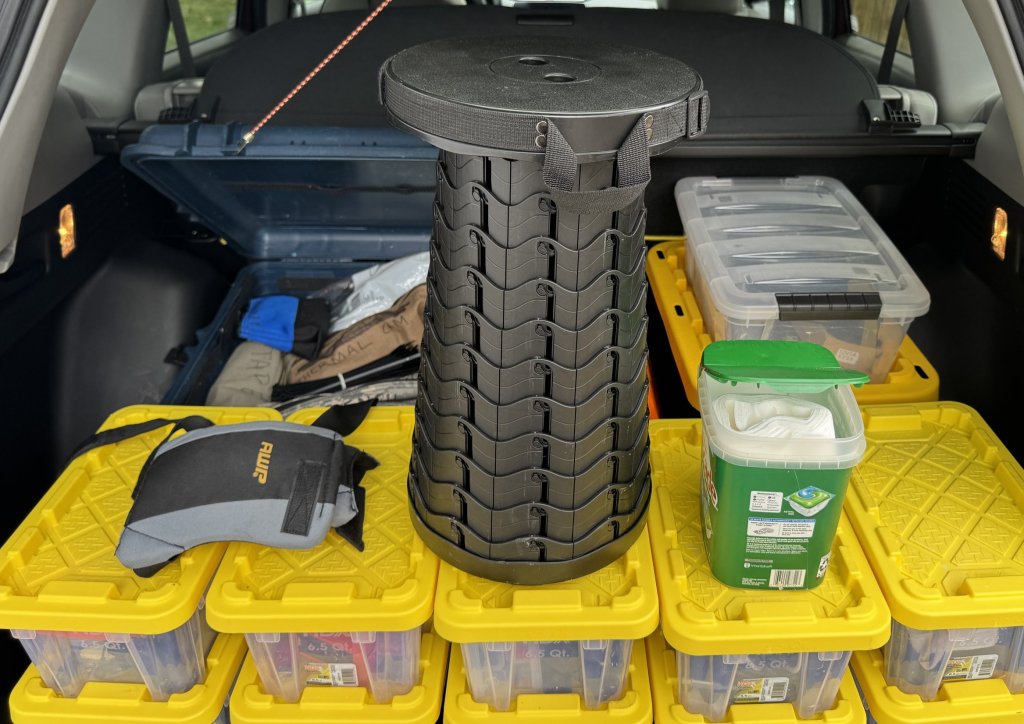
- Collapsible Stool. I cannot overstate how great a deal this is at $22. It’ll save your knees and your back, and weighs very little.
- Rubber Knee Pads. In Bin #5 I have a basic set that’re just sculped foam with a single velcro-ed strap. Perfectly sufficient for indoor use. But it’s not a bad idea to get something more robust for outdoor usage. I do not recommend the hard plastic kneepads (they tend to be uncomfortable) but something with heavy rubber can work nicely.
- Shop Rags. Paper towels are too delicate for most work I do. “Shop towels” or “shop rags” are somewhat less absorbent but far tougher. They tend to come in quantities too big to easily manage, so I re-used an empty dishwasher detergent pod bucket and stuff a large wad of rags in there.
Last But Not Least
I also have three last “finishing touches” on my car that you may or may not wish to emulate:
First: I got a fake license plate, mounted below my real one on the front, that says “ENGNEAH”. That being the proper phonetic way to say “Engineer” with a Rhode Island accent. 🙂 Rhode Island is a two-plate state, but some states don’t require a formal front-plate, and you can just use this “fake vanity” plate as-is.
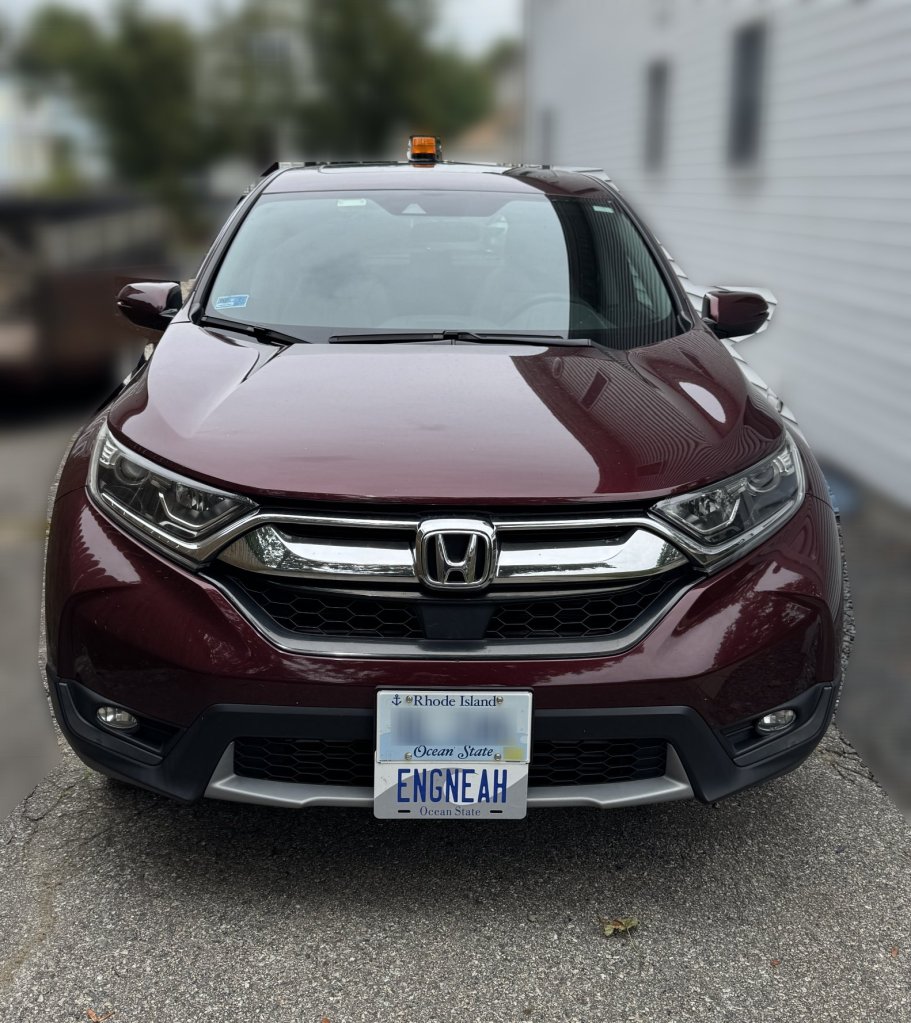
Second: I bought a yellow/amber strobe light. This particular model has multiple flashing styles, plugs into any cigarette lighter socket, and has a magnet base (with a plastic coating) so you can easily put it on / take it off your rooftop.
NOTE: do not purchase a red, blue or green strobe light! Those are reserved for emergency services in most states.
I also purchased a Roadmaster 9332 cigarette lighter outlet kit, and a Nilight add-a-circuit fuse tap kit. With a bit of research, I identified a fuse socket that was always powered, as opposed to the normal cigarette lighter socket that usually is powered only when the accessories are turned on. This way the strobe could easily remain lit when the car was off.
I find this sort of light is useful when parking in odd locations at institutions. College campuses, for example. The campus police hassle you less if you’ve got one of these. It is, of course, also good at making your car more visible to crazy drivers (of which we have many in Rhode Island) when parked on the side of the road for certain tower sites.
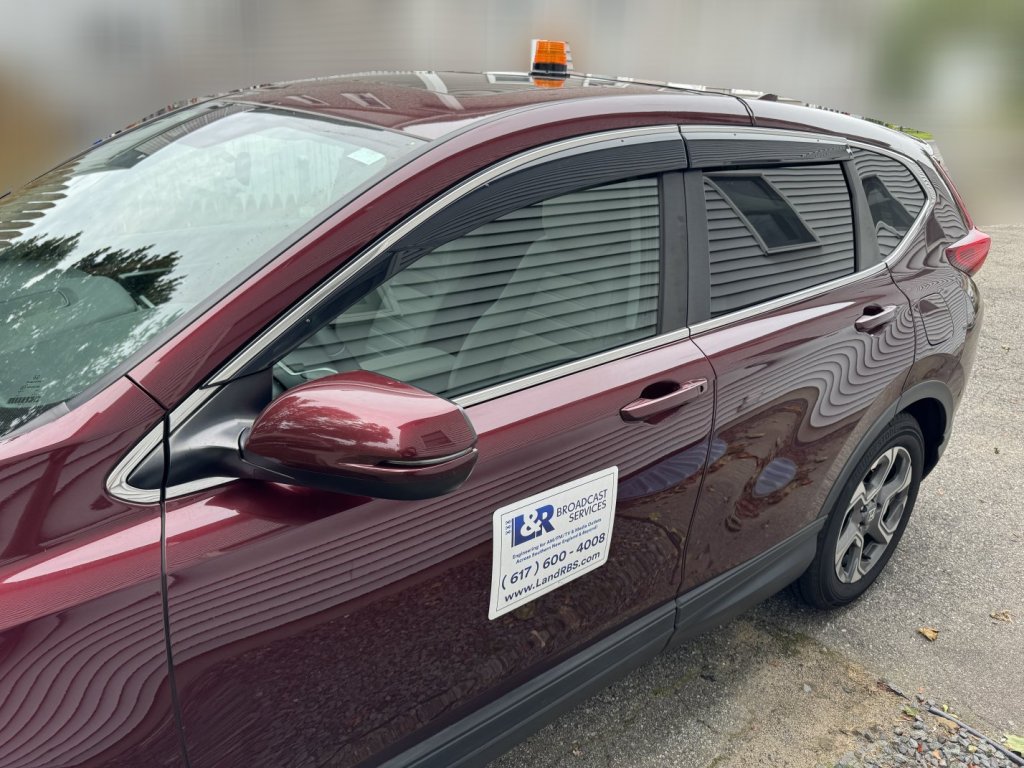
Third: I custom-designed my own vehicle magnet sign from BuildASign.com. I recommend the thicker 0.045 material; it sticks better and lasts longer. And get at least 9×12 inches (HxW) in size, which is the size of the magnet in the picture. 12x18in, or even 18×24 is also good; it depends on how comfortable you are with the guy you just cut off in traffic and/or honked angrily at knowing exactly who you are.
Note that in addition to the L&R company logo, I specifically mention:
- The services our company provides, so inquisitive authorities know why the car is there.
- Our web address, so they can look up more information about us.
- Our phone number, so if they need to reach us immediately to move the car, they can call and do so.
I often take the magnet off and store it in the car, like on the weekends. This is both my work and personal vehicle, after all. Remember to store it on a perfectly flat surface so you don’t get wrinkles in the magnet. Wrinkles usually come out quickly (especially if it’s not too cold outside) but if that magnet isn’t perfectly flush with the metal of the car, the wind of highway speeds can rip it right off the car!


 L & R Broadcast Services
Leave a reply to mikemodney Cancel reply