There’s a tower site I maintain that has a large field around the tower, and a lot of people like to believe it’s something of a public park. It most certainly is not, but they believe it anyways…despite considerable signage and a whole lot of poison ivy.
Accordingly, there’s a quintet of security cameras set up on and near the tower, so at least there’s video evidence of any trespassing and, potentially, some legal cover if something goes sideways out there. But there’s a catch: one camera, off by itself, that has to watch the access road onto the field. It only has one cable (CAT5E) for data and power, and that has to be used by the camera in question: a Reolink RLC-811A. I’m not a huge fan of the Reolinks, but they’re what’s in place at this facility. (eight total, plus an NVR)
One thing I quickly learned is that flying insects really like the 850nm infrared lighting these cameras use. And since the bugs like them, the spiders like them even more. So every camera with its I.R. lights on quickly attracts a mess of spiderweb strands across the lens, which are very reflective of I.R. light and make the camera useless.
With the other four cameras on the field, I was able to easily implement separate I.R. spotlights so I could leave the cameras’ I.R. lights off. But this one camera by the access road I can’t do that with. I need a source of lighting that doesn’t require wired power. Fortunately, solar lights are plentiful and cheap on Amazon. Surely there must be an I.R. version, no? Well, no, there aren’t. Battery-operated I.R. lights do exist but they’re large, bulky and very expensive…and they must be plugged into charge them. Solar panels won’t cut it.
If you want it done right? DIY!
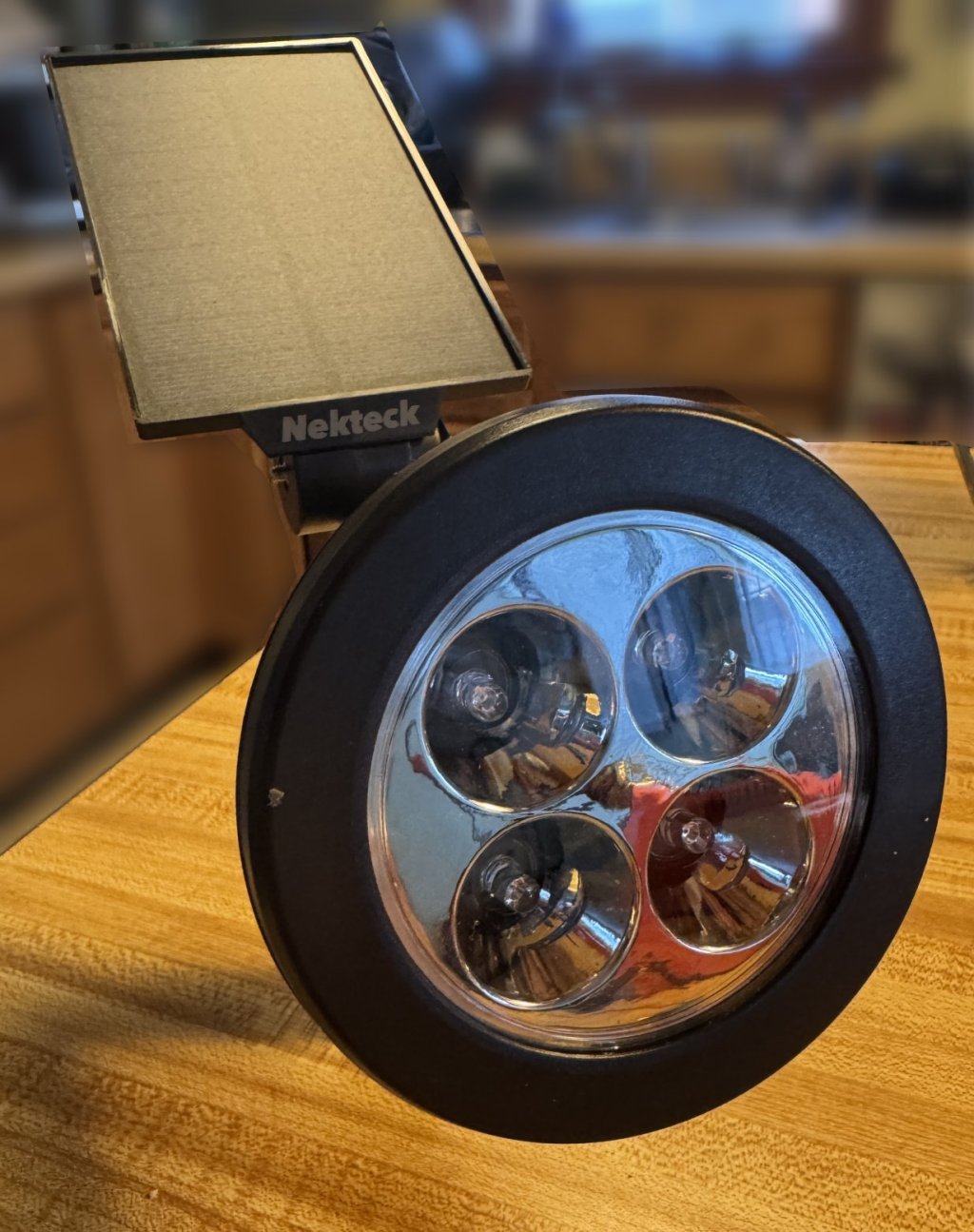
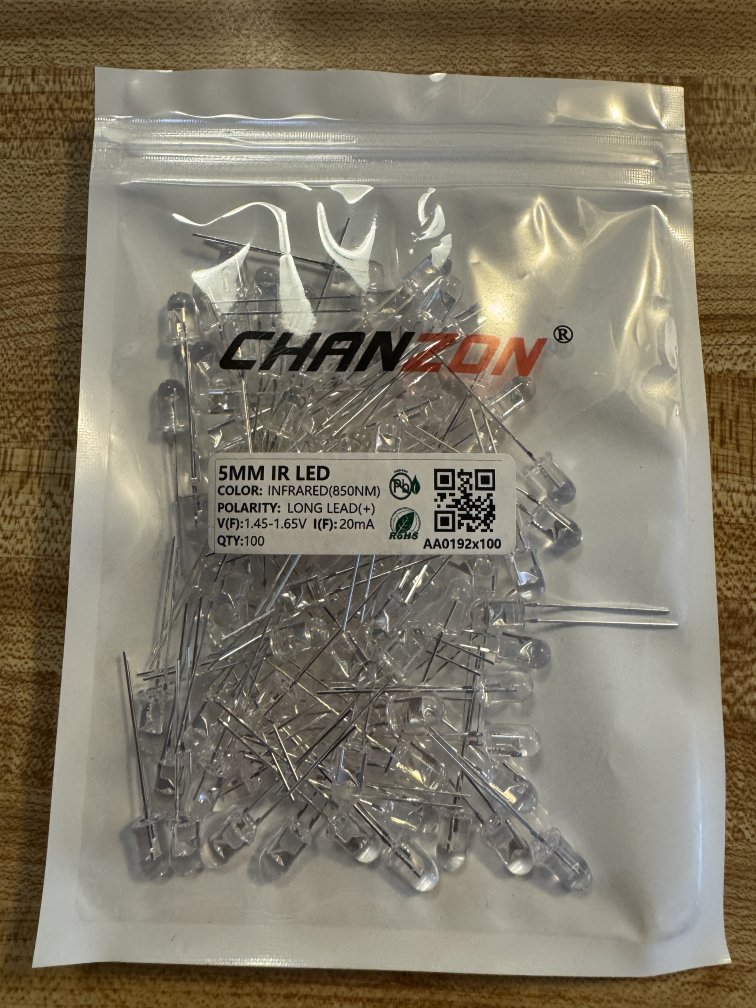
I decided if nobody sold such a thing? I was going to make my own! I purchased a two-pack of Nekteck Solar Lights for $29.99, and a bag of Chanzon 5mm 850nm LED’s. I didn’t need a 100 of them, but that’s the smallest quantity they came in, and it was $8.99.

First thing was to disassemble the Nekteck lights. After removing four small screws around the back lip of the front cover, I found it was best to use a boxcutter along the seam to help pry it open; the cover is glued in place to help waterproof it, and it will take a little effort (not too much!) to pry it open. These lights are notorious for leaking water into them, so that may be a problem later. If it is, I’ll replace them and try again with silicone sealant around the edge when I’m done.


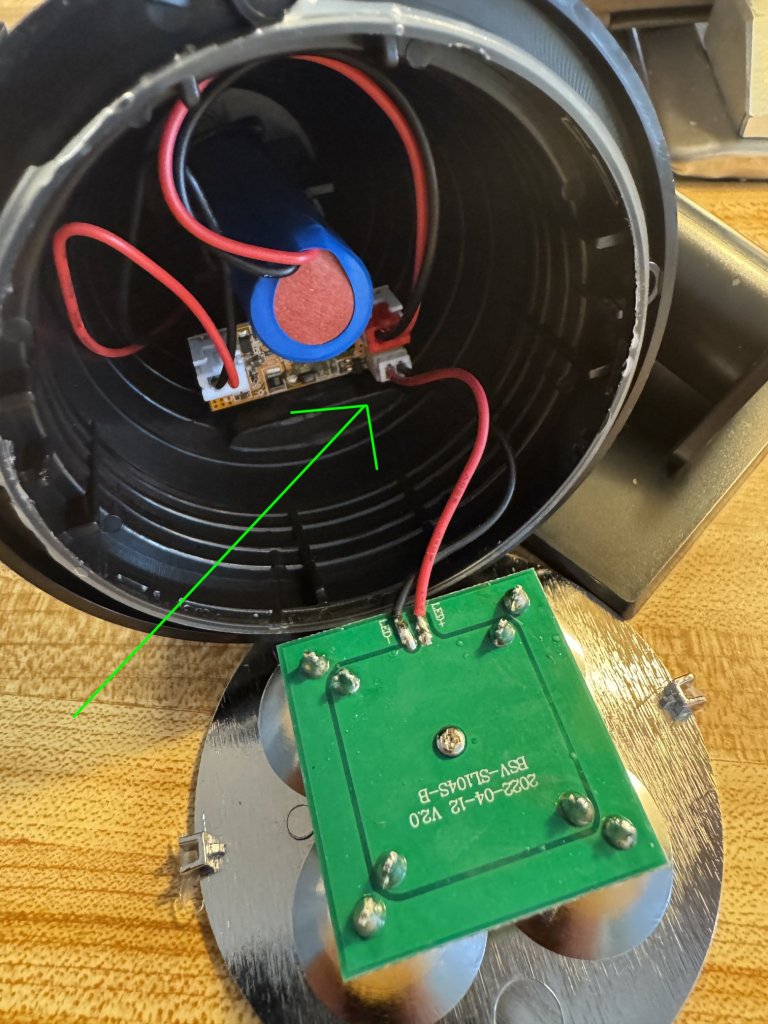
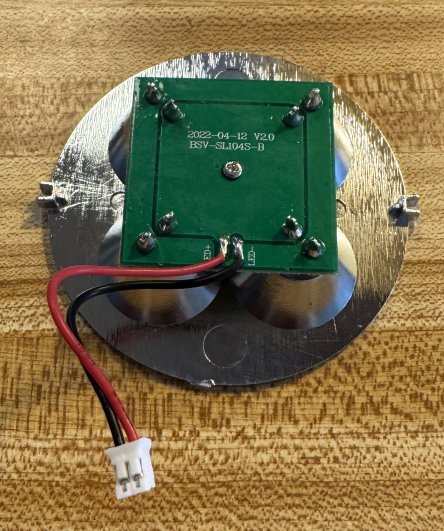
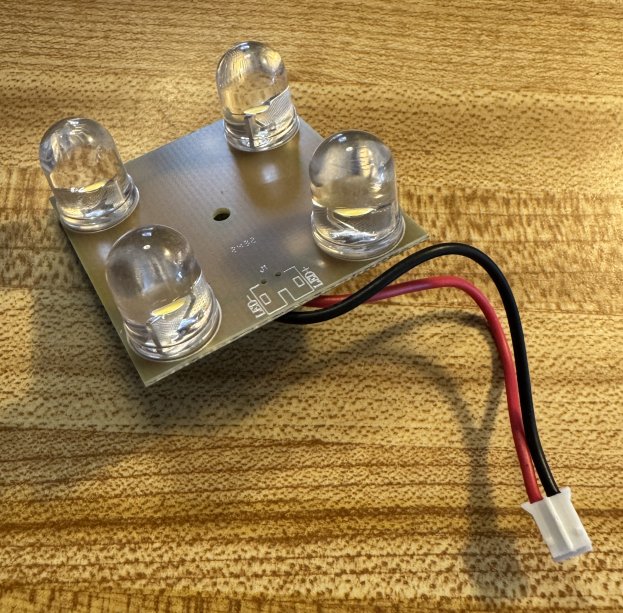

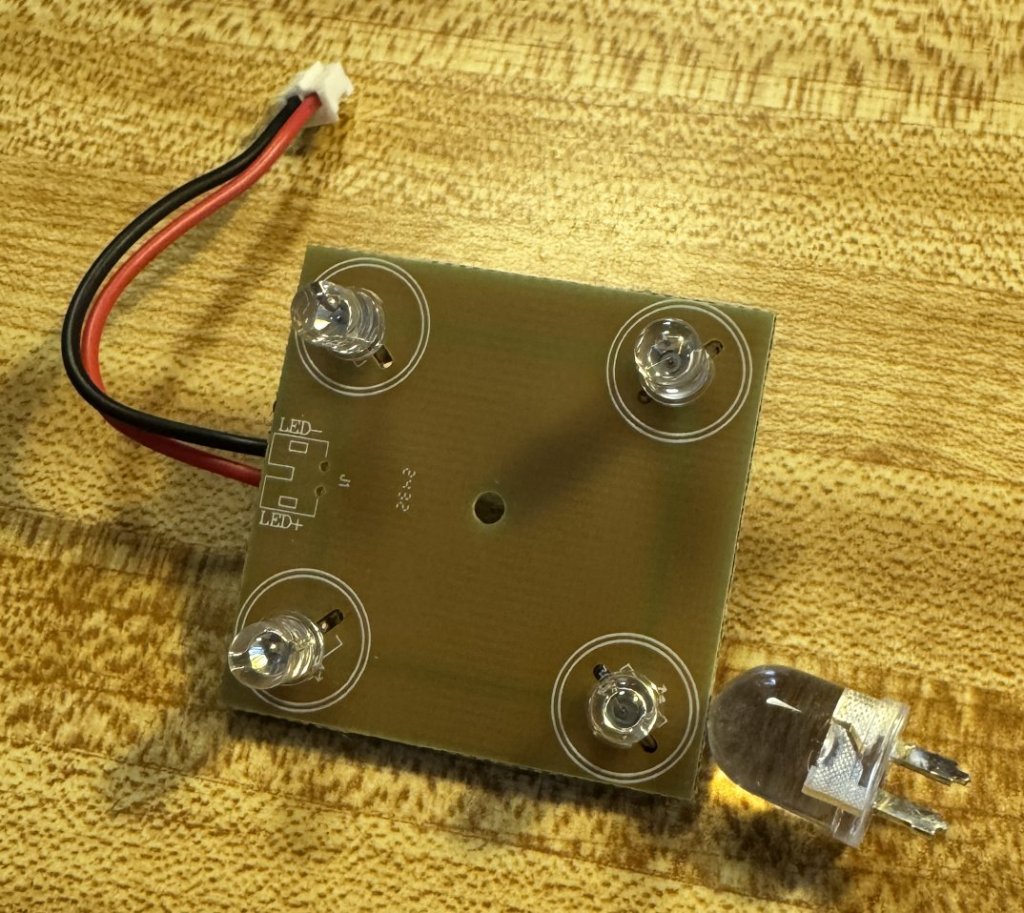
Once removed, it was easy to unplug the light assembly from the main PCB inside, and one more screw took the lights’ PCB off the lens assembly. The way the LED’s are mounted, the inner terminal is positive and the outer is negative. A little soldering iron pressure on the LED terminals and they slide right off the PCB. A little more to position the new I.R. LED’s and it’s an easy solder job to lock them in place.
Screw the LED PCB back onto the lens assembly. Note that these LED’s are physically much smaller than the visible-light LED’s, so you have to be a little careful how you put them back together. Connect the wiring back to the main PCB, slide the light assembly back onto the main case, and put the four screws back in the back lip.
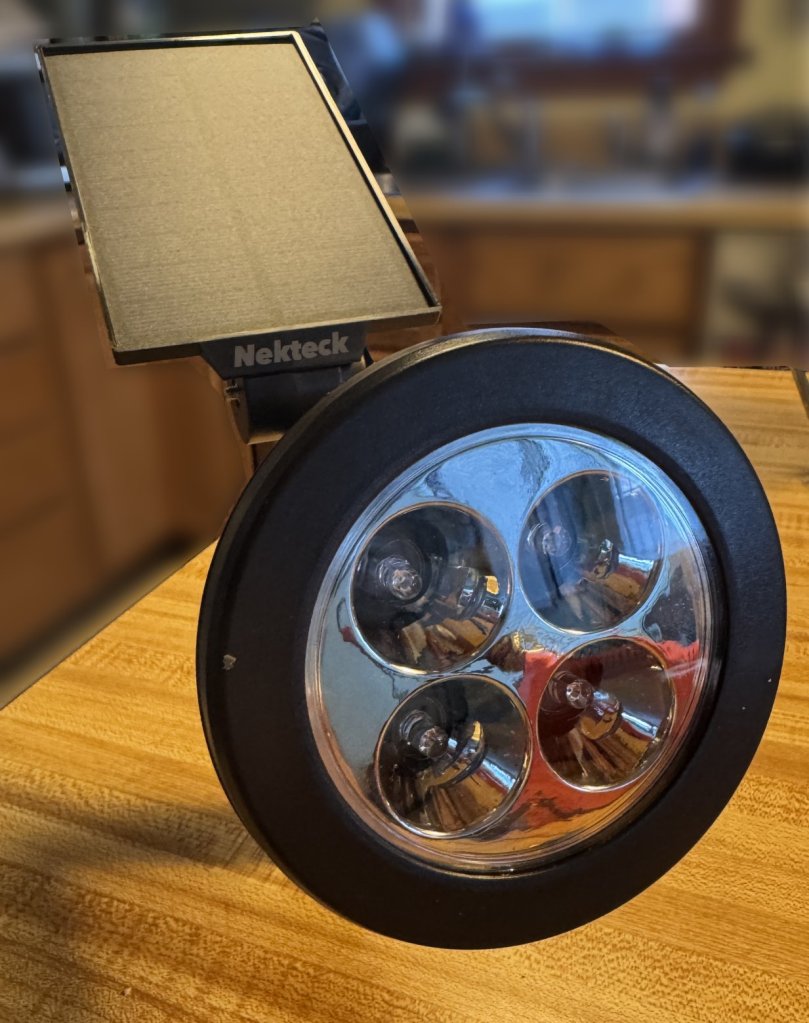
A quick check by covering the solar panel showed a faint red glow from all four I.R. LED’s. I set it to the brighter of the two settings, and went off to install these lights in the field.
It’s a bit of a trick mounting things to this pole, but I made a swing-arm assembly to make it easier a long time ago. This pole helps ensure the lights are both out of the reach of prying hands, but also high enough to get good direct sunlight year-round, as the southern perimeter of the field is all old-growth trees that’re 50 to 80ft tall.
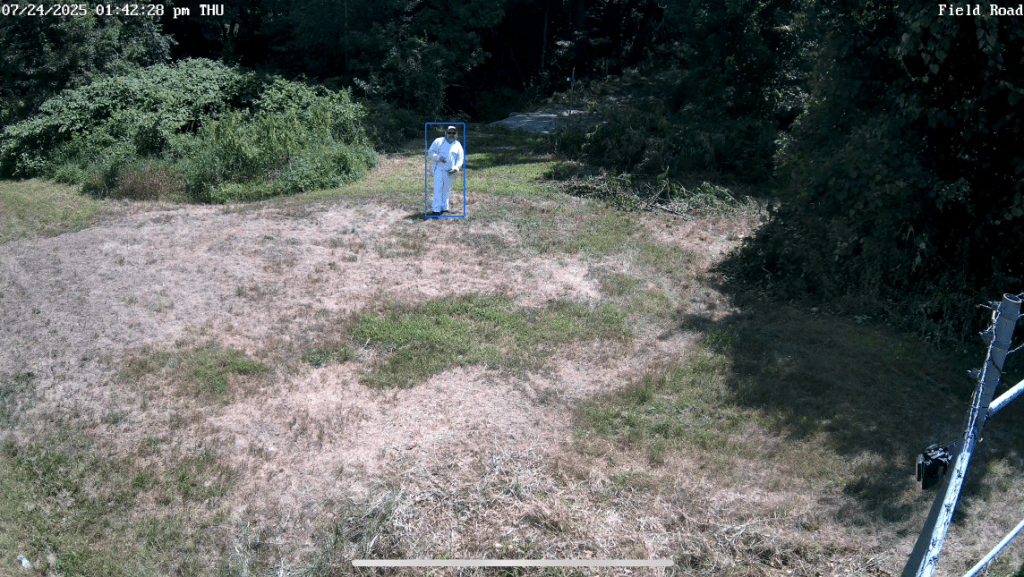
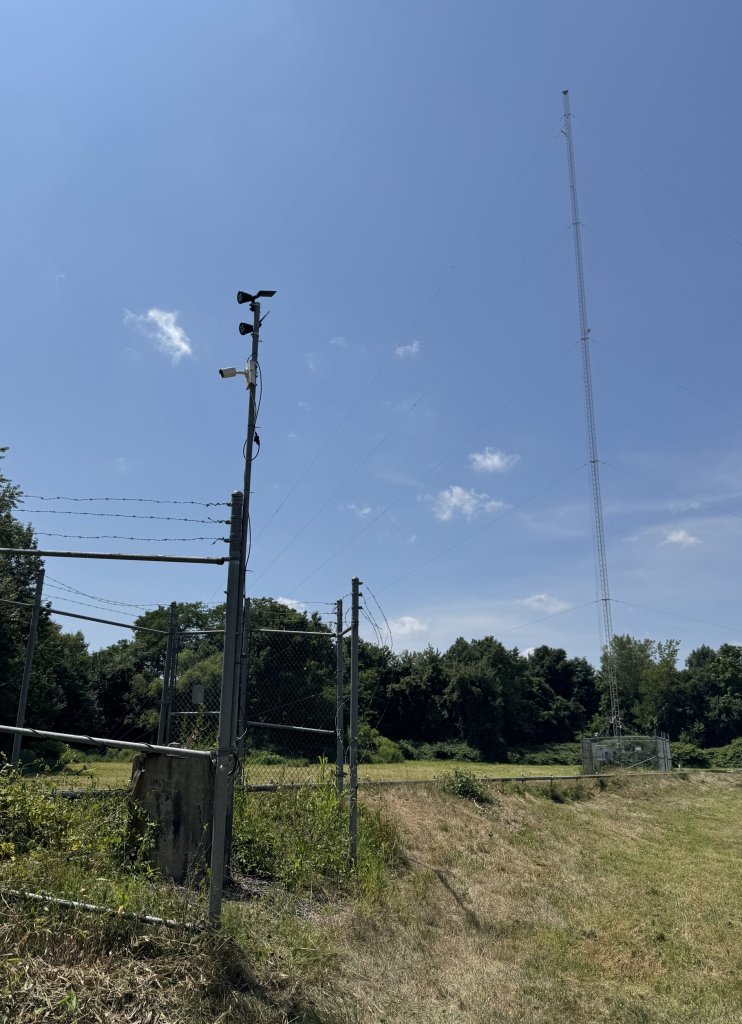
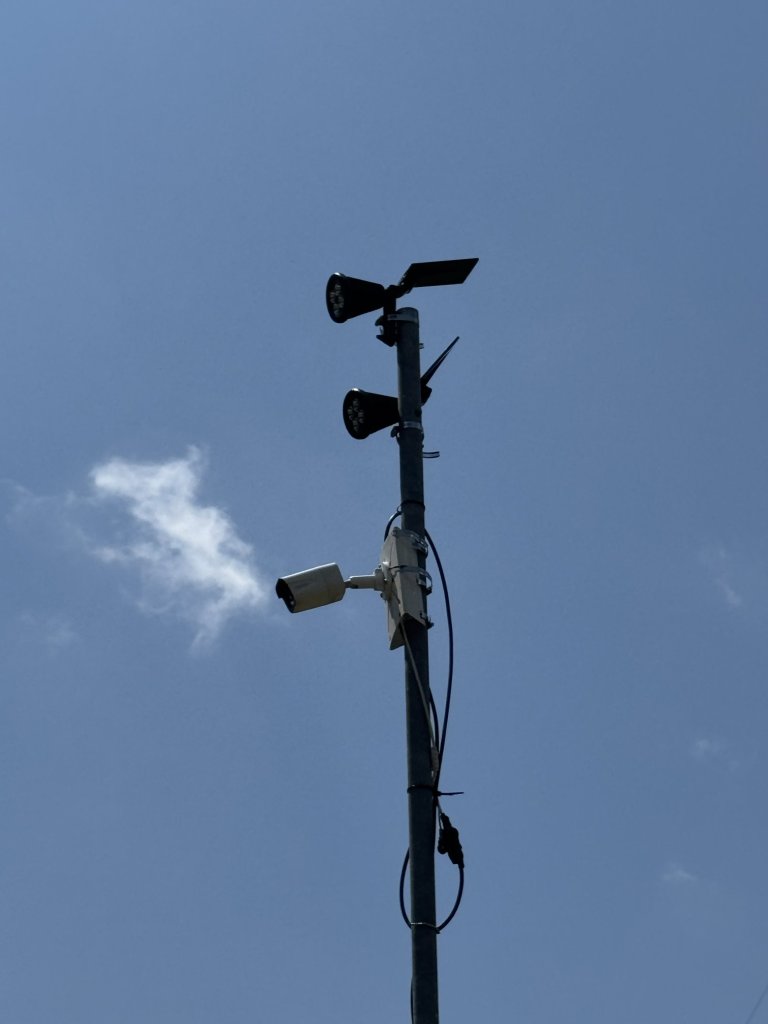
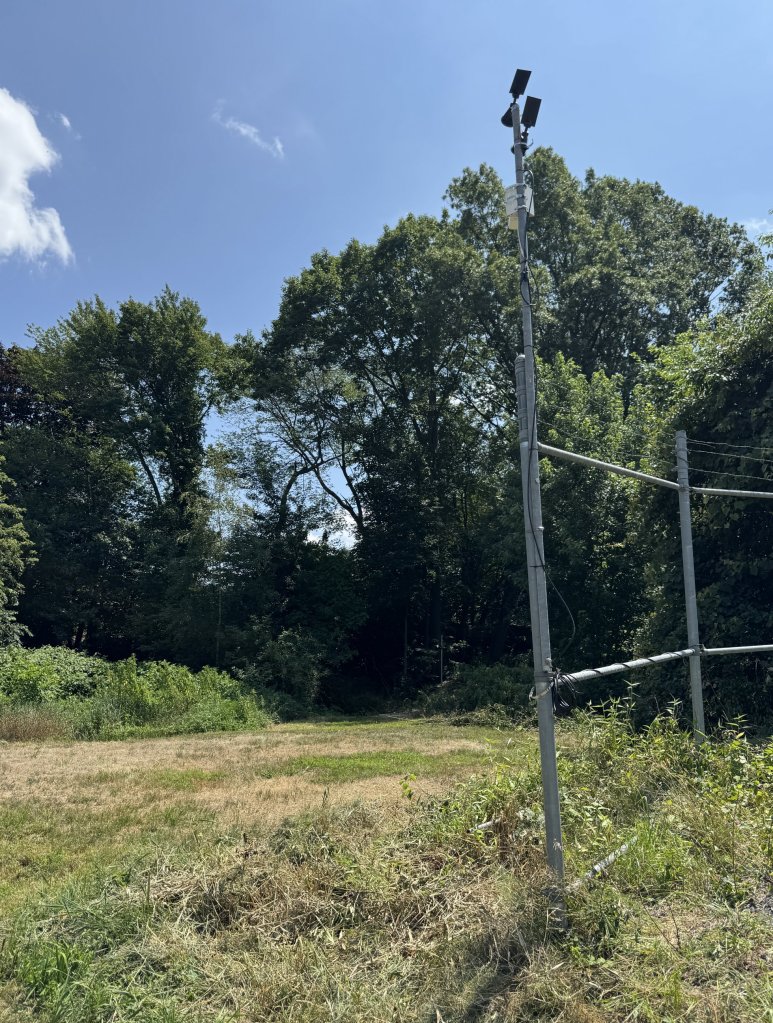
How well does it work?
Short answer: it works, but not super-well. Definitely the camera is able to see more than it could without the I.R. lights, but it’s far from being “well lit”. I do think if someone walks the most likely path by the camera, the lights will be enough that the motion detector will trip, and that’ll be enough to record the presence of the person. Hopefully better recordings of their face can be made by the brighter I.R. spotlights closer to the tower.
I set these up at about 1:30pm today, and sunset was at 8:11pm. Figure there was a solid 5 to 6 hours of good sunlight on the panels to charge the battery inside. Today was very sunny and only a few clouds. Ideal weather for solar lights.

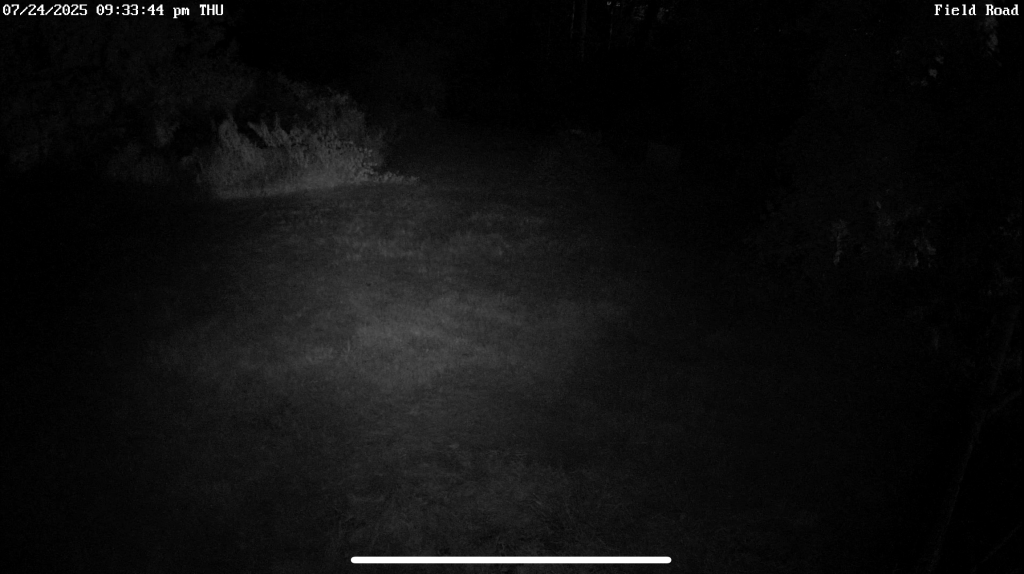

The bigger problem is that I figure the lights came on around 8pm or so (the camera switched to nightvision at 8:30pm, and it usually switches only when things are very dark), and by 12mid they’re pretty much gone. A four-hour battery life total means only 2, perhaps 3, hours that’re actually useable. And it’ll be nigh-useless when winter rolls around and we get the triple whammy of:
- Much earlier sunsets (3 to 4pm), so the light has to be on for more hours after dark.
- Less direct sunlight due to lower sun angle & trees in the way (even without leaves).
- Colder temps have a negative impact on battery performance.
I could also try a bigger I.R. LED like these 3W versions, but undoubtedly the battery will be exhausted much, much faster. I could also try and hack a bigger battery, or batteries, in the case. There’s probably enough room for at least one more.
And yes, I could use the existing CAT5E cable as a pull-cord to pull both an actual pull-cord along with a second wire to carry 12VDC power for a proper I.R. light. It’d be a big pain in the butt, but that may ultimately be the best answer.
Conclusion
Still, I wanted to see if it was possible to make a solar-powered I.R. light and it is, technically, possible. Even if the performance isn’t as good as one might hope. And one can’t argue with the price, either: about $30 of parts and maybe 30 minutes of work.

 L & R Broadcast Services
Leave a comment