In the last few years, I’ve discovered something interesting. Perhaps obvious in retrospect, but interesting nonetheless: “Hassle Doesn’t Scale.”
It doesn’t matter all that much whether it’s a 50,000 watt Class B FM blowtorch, or a 100 watt minimum-Class A FM facility; it is (relatively speaking) the same amount of time, money and effort…not to mention pounding your forehead against your desk…to put any new FM station on the air. I learned this with W275DA in 2021, but it wasn’t until I brought WNPW 89.5FM Westerly on the air in 2024 that it really coalesced for me.
The Backstory of WNPW
WNPW is something of an anomaly: it’s the second time The Public’s Radio has had a signal in the Westerly, RI area.
Back in the WBUR/WRNI days, The Public’s Radio bought then-WERI 1230AM Westerly in 1998 for a song ($250k) because they could. But WXNI never really did much for them in terms of audience, membership, or underwriting. So when WRNI became independent as “Rhode Island Public Radio” in 2007, and bought what’s now WNPE 102.7FM? They decline to buy 1230AM from WBUR (they did take 1290AM in Providence). So WBUR sold to DiPonti Communications for $350k (between nine years of inflation and recouping the costs of the significant technical improvements, they barely made their money back).
However, 102.7 covers a lot of South County…but it never really covered Westerly itself. Now I’d had my eye on 89.5FM as a good possible option to get back into Westerly again for a long, long time…even before TPR bought 89.3FM! And when the FCC non-comm filing window opened in 2021, I pounced on it. Miracle of miracles, nobody else did – we got it as a singleton and the CP was granted on Nov 15, 2022.
Tricky Bit #1: The Planning
Unfortunately, in the years since, 89.5 had become less easy to make work. Ironically because the two biggest limiting factors had become WPKT 89.1FM Norwich CT, and…well…our own WNPN 89.3FM itself! Before we bought 89.3 and moved it, there was a lot more room to put a lot bigger signal on 89.5 somewhere in Charlestown. Now we were limited to one of two possible towers, neither of which were really all that good. One was a fully-loaded monopole by the Haversham, the other is where we ultimately built it: a lightly-loaded self-supporter at the Bradford Sportsmen’s Club just over the Westerly/Charlestown line.
Both towers limited 89.5FM to needing a directional antenna with a hard null to the east to protect 89.3FM. Both limited the ERP to a few hundred watts, or just 100 as it turned out (the legal minimum). And both were highly likely to have problems putting a viable signal down into the Pawcatuck River Valley where downtown Westerly is, thanks to the hills/terrain along Granite/Franklin Streets, west of Rt.78.
Still, I was confident 89.5 would be a lot better than 102.7 is over most of Westerly, including the desirable (rich as heck) coastal neighborhoods of Watch Hill (where Taylor Swift has a house!), Weekapaug and Misquamicut. And I had hope that maybe 89.5 would work well enough in downtown Westerly.
Tricky Bit #2: Being Ass-Backwards
There isn’t really a formal procedure for getting a new FM station on the air; you do whatever it takes. But usually there’s a typical progression in the timeline of construction:
- Apply for, and get, a Construction Permit from the FCC.
- Sign a lease with the tower owner.
- Submit a ton of paperwork to the tower owner as part of a “structural study” that determines if the tower can physically handle the added weight and wind-load of your equipment.
- Get your NTP/Notice To Proceed from the tower owner.
- Order electric power service; have an electrician install the meter, breaker panel, and related hardware.
- Purchase and deliver a shelter building for the transmitter gear. This can take months, especially if you need a new concrete pad poured.
- Purchase your antenna, RF cabling, and transmitter gear. This usually takes 4 to 12 weeks to actually get it all.
- Get the shelter hooked up to power, HVAC and internet.
- Install your transmitter and related gear in the shelter.
- Have tower climbers install the antenna and RF cable to it.
- Hook everything up and submit your “Program Test Authority” and “License to Cover” paperwork to the FCC.
Needless to say, that is not how it went with WNPW.
First off, the tower owner is Crown Castle, and they are much more accustomed to working with cellphone companies than FM stations. The paperwork is different, the engineering is different, everything is different. That means it takes much, much longer…several months in our case…to get the coveted “NTP”.
That delay started pushing us into spring, and spring is when ospreys build nests. Ospreys are protected under the Migratory Bird Act, and they love to build very large nests on top of cellphone towers. Legally, once the nest has eggs, you’re done for the summer. You can’t climb again until September/October after the chicks have fledged. Also, get too close to an osprey nest when there’s eggs or chicks, and they will attack you. That’s a raptor with a five-foot wingspan, a very sharp beak designed to rip apart fish for food, and very nasty sharp talons on their claws.
And sure enough, in early March during a site visit? We saw a nest that wasn’t there last fall. So one of the first things I had to do, before we even got the NTP, was have my general contractor (Industrial Communications of Marshfield MA) send climbers up to destroy the nest before the eggs appeared. To do that however, we had to prove the nest was inactive. Or at least there were no eggs. We hired a drone operator in March 2024 to photograph it.
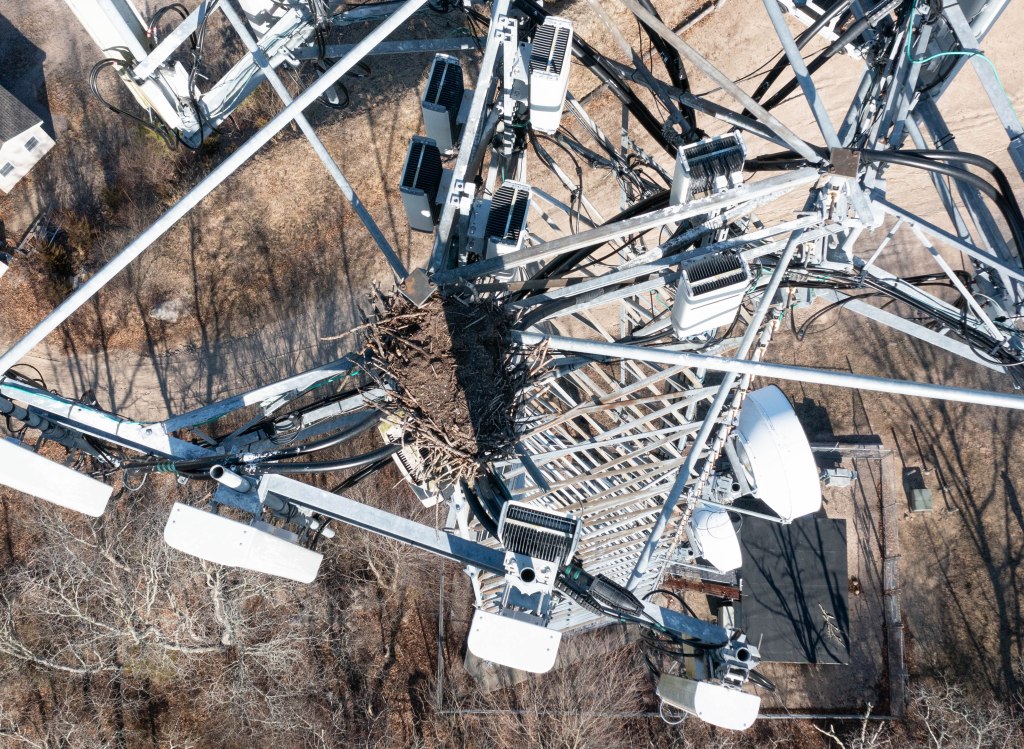
The nest looked like it might be abandoned, but we couldn’t be sure. Fortunately, there were no eggs, so RI-DFW agreed to permit us to remove the nest. A few days, and $1200 for the tower climber, later, the nest was removed.
Unfortunately if the nest was indeed active? Removing it only buys you a few weeks before the ospreys come back and try again. Sure enough, within a week an actual osprey was spotted flying around, and soon we could see the nest taking shape again. We had to move fast! None of the electrical was even started, the shelter pad wasn’t poured, and a lot of the transmitter gear wasn’t purchased yet. But we needed to get that broadcasting antenna installed now!
Get that Antenna Up!
Fortunately, I had worked extensively with Crown Castle over the winter regarding my choice of antenna. So I’d already ordered it and had it ready. Crown Castle expedited our NTP, and we were ready to get that bad boy up there.
Before we get there, allow me to spend a moment about the antenna itself.
I normally go with Shively Labs for jobs like this, but this was right when they were sold to AAT and just weren’t really available. I ended up using Systems With Reliability instead. Got a one-bay FMECRA1_DA, which meets, just barely, the pattern we got licensed. Like all side-mount antennas on a self-supporter, though, it’s a goofy pattern.
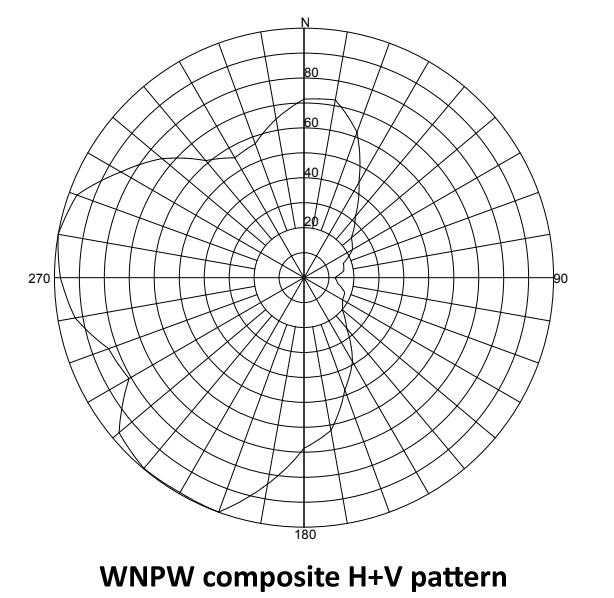
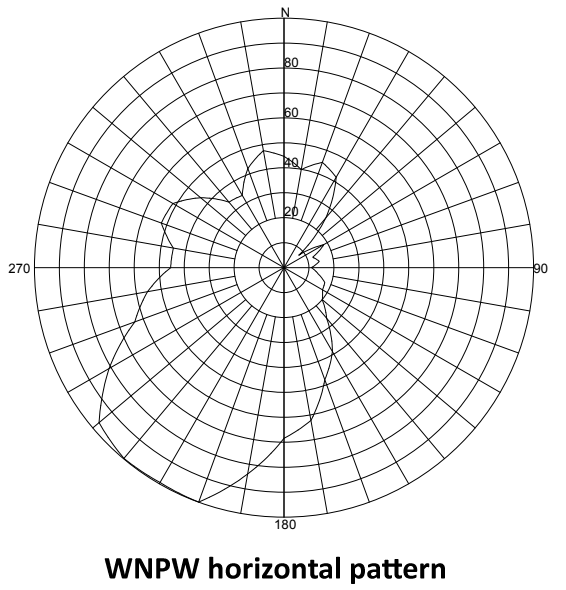
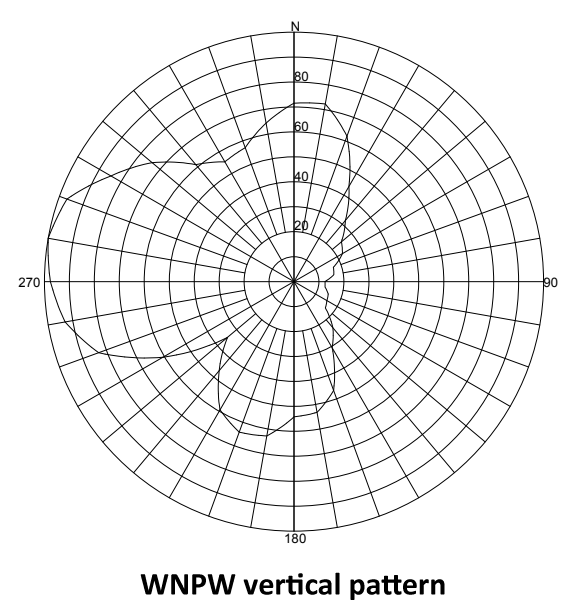
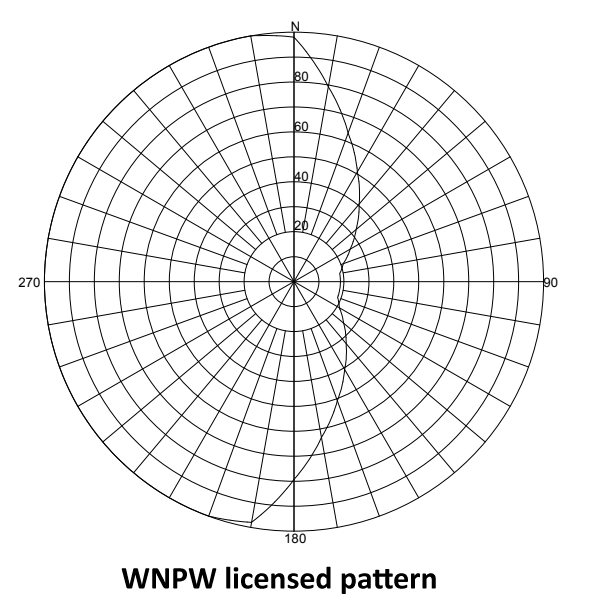
Unfortunately a panel antenna was too expensive. And we really needed that deep null to prevent contour overlap with WNPN. The only alternative would be to modify the pattern of WNPN (not really possible) or just reduce WNPN’s ERP/wattage (definitely not really possible).
One might reasonably ask: why not use a Scala CA2-FM/CP antenna (PDF) instead? Or perhaps a Scala CL-FM (PDF)? Certifying the directional pattern would be a lot cheaper. The pattern would be a lot more consistent. And the overall cost of the antenna would be considerably lower, too. Problem is, the CA2 has too big a lobe off the rear axis; again the contours are right up against WNPN’s. And the CL-FM, besides being inherently H or V polarized instead of circularly-polarized (I mean, there’s “slant polarized” but whatever) was too narrow a pattern to cover enough of Westerly to meet the FCC’s Community of License requirements…not to mention to cover enough of the town, period.
Regardless, on a very soggy morning of April 13, 2024, we assembled and hoisted up the antenna onto the tower. Well and good!
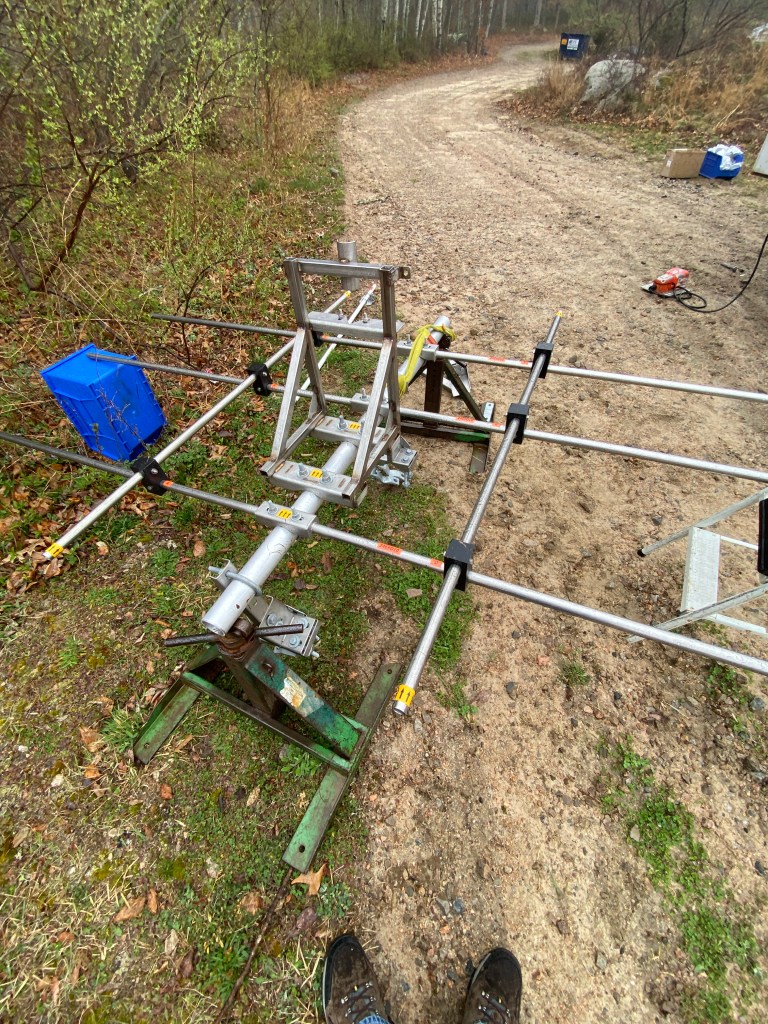
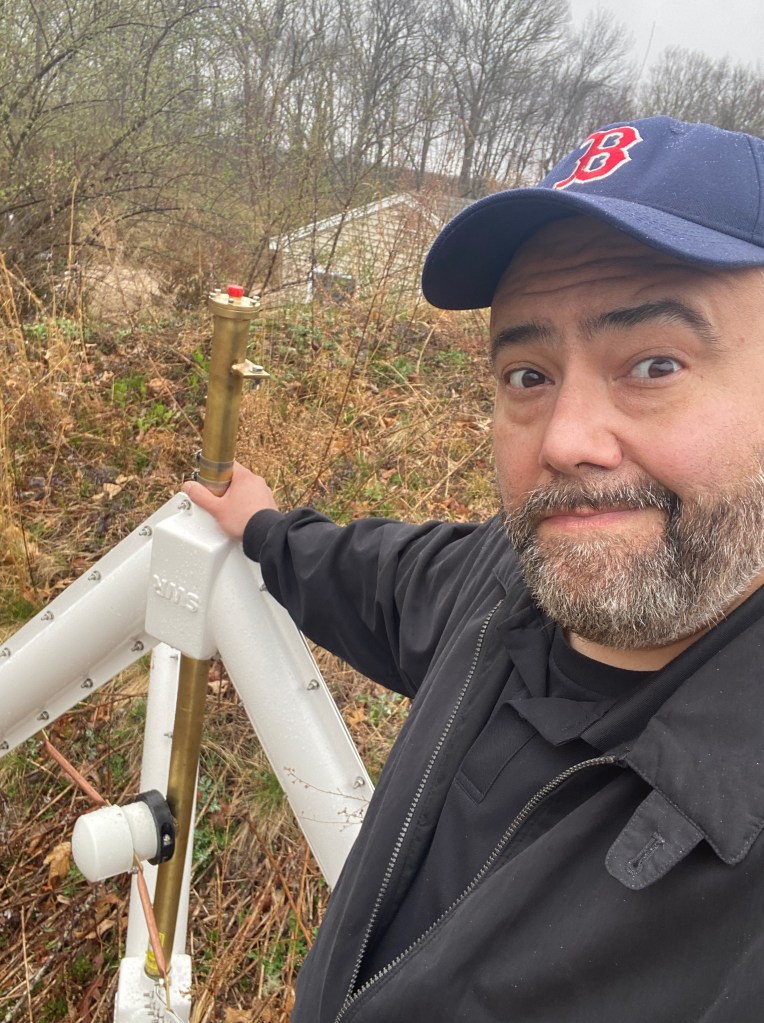
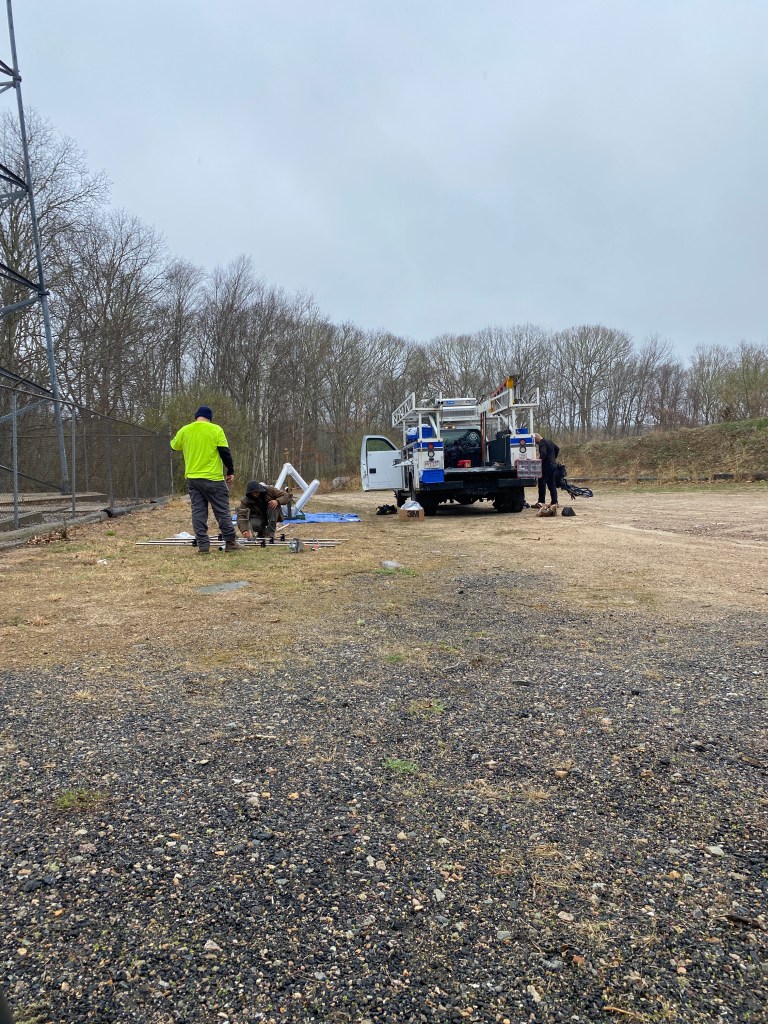
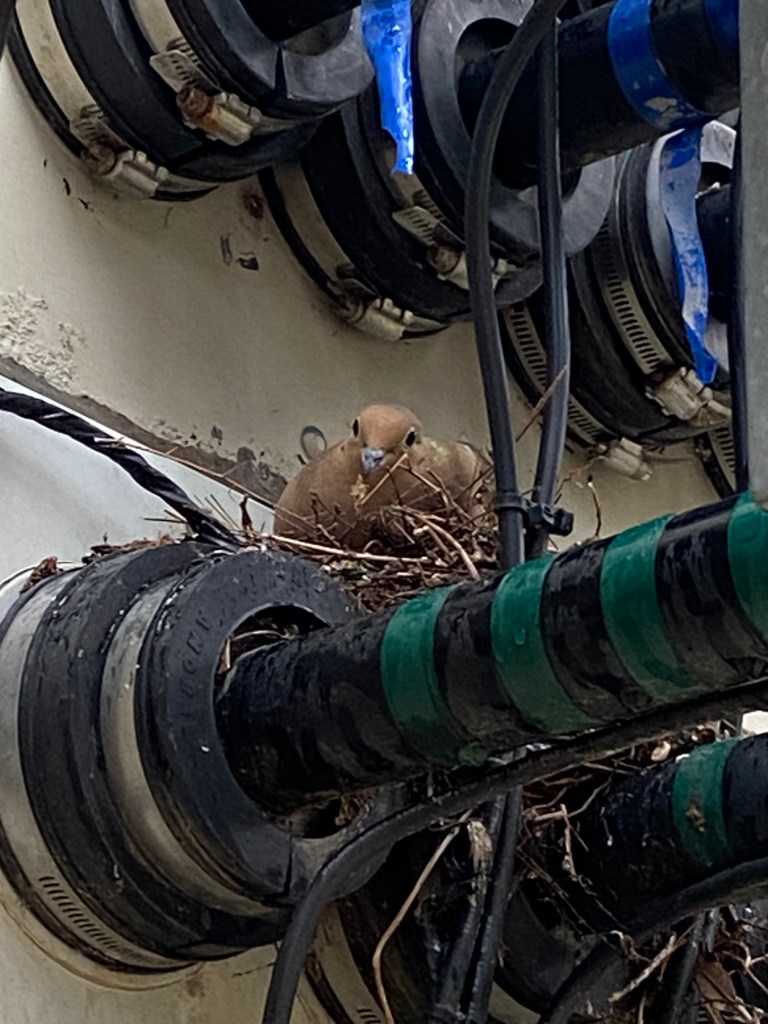
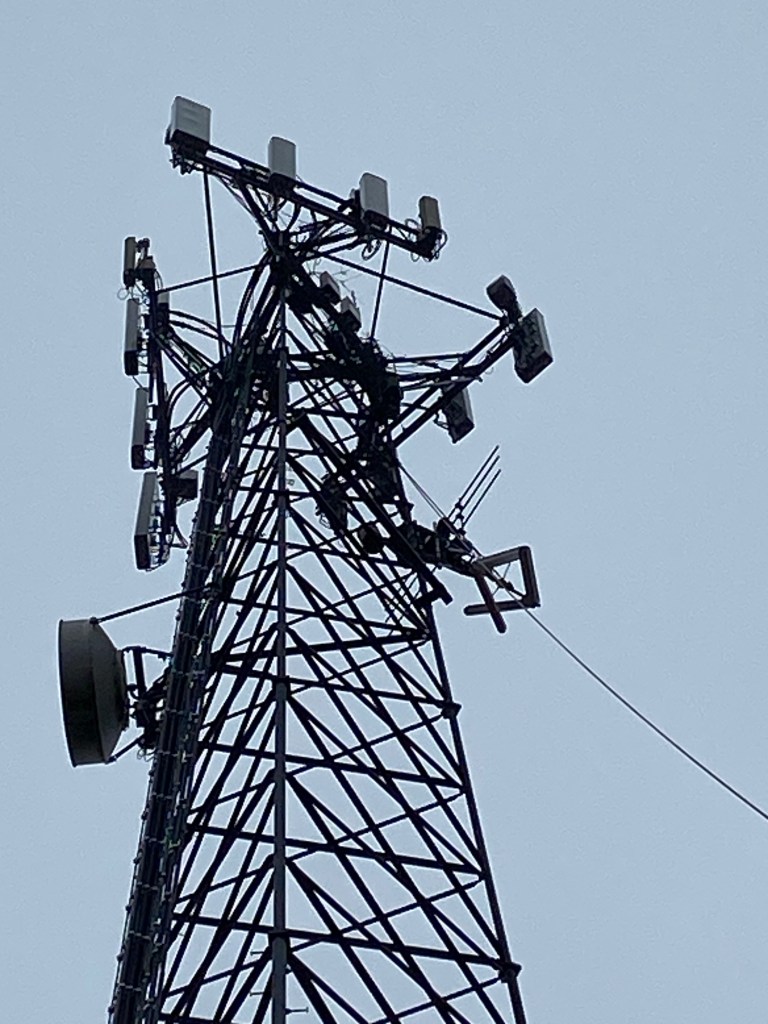
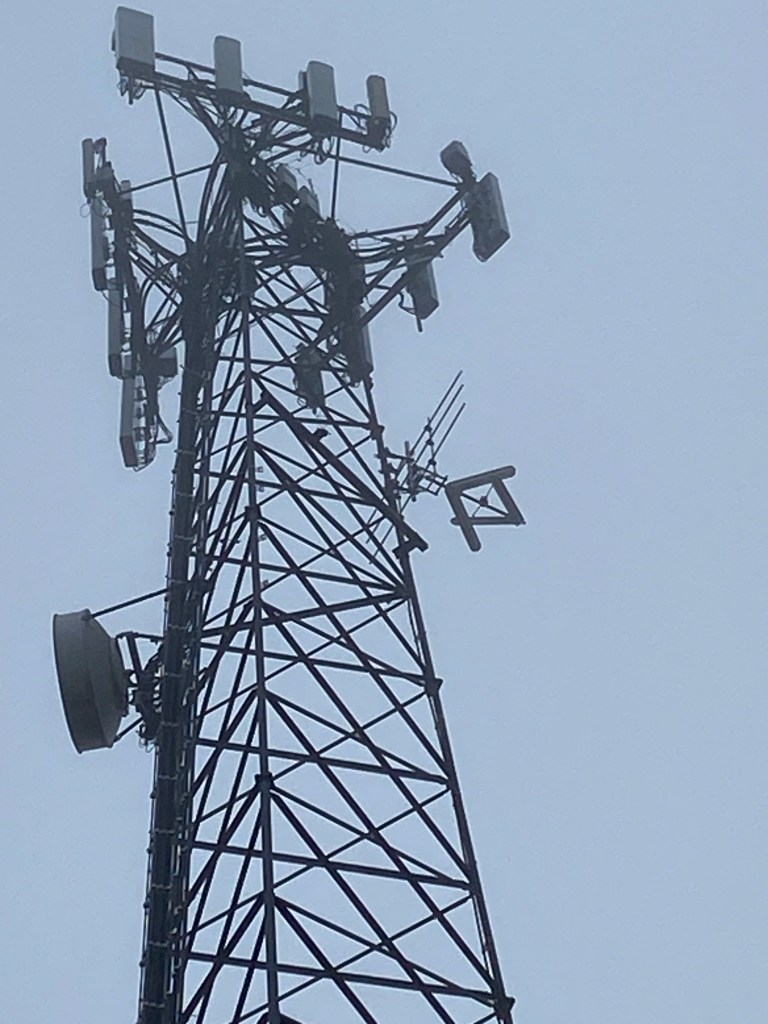
Unfortunately, almost nothing else was ready to go yet. I had to “steal” a small (backup) FM transmitter from one of our other sites to test the line and antenna, and “steal” a bit of electricity from one of the other tenants on-site since our power wasn’t hooked up yet. Fortunately, I saw 0 watts reflected on 120 watts forward. Hooking up a NanoVNA and sweeping the line showed 1.03:1 VSWR on 89.5 MHz, which is right on the spec of 1.0368:1. So at least the antenna is ready.
Two weeks later, on April 25th, the ground-level guys from Industrial Communications showed up to pour a 6x8ft concrete pad with a halo ground, and to trench a conduit over to the meter panel for the electrical power. As they should, they used CAD welding (e.g. thermite) to attach the ground cables to each other – always fun to watch!
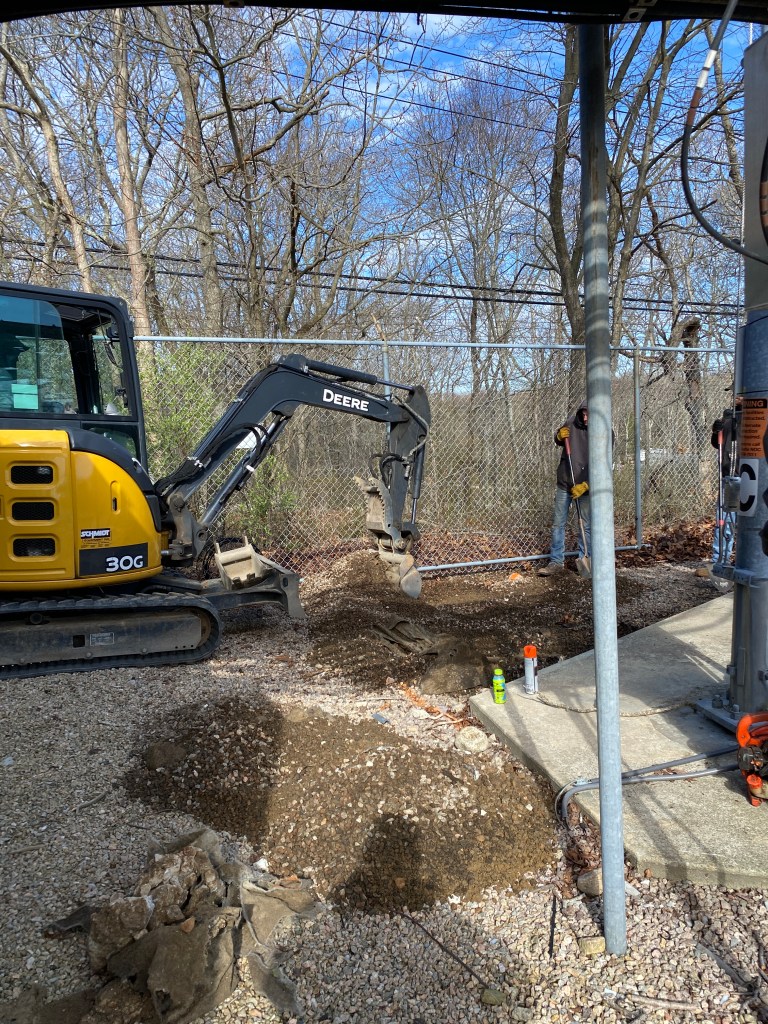
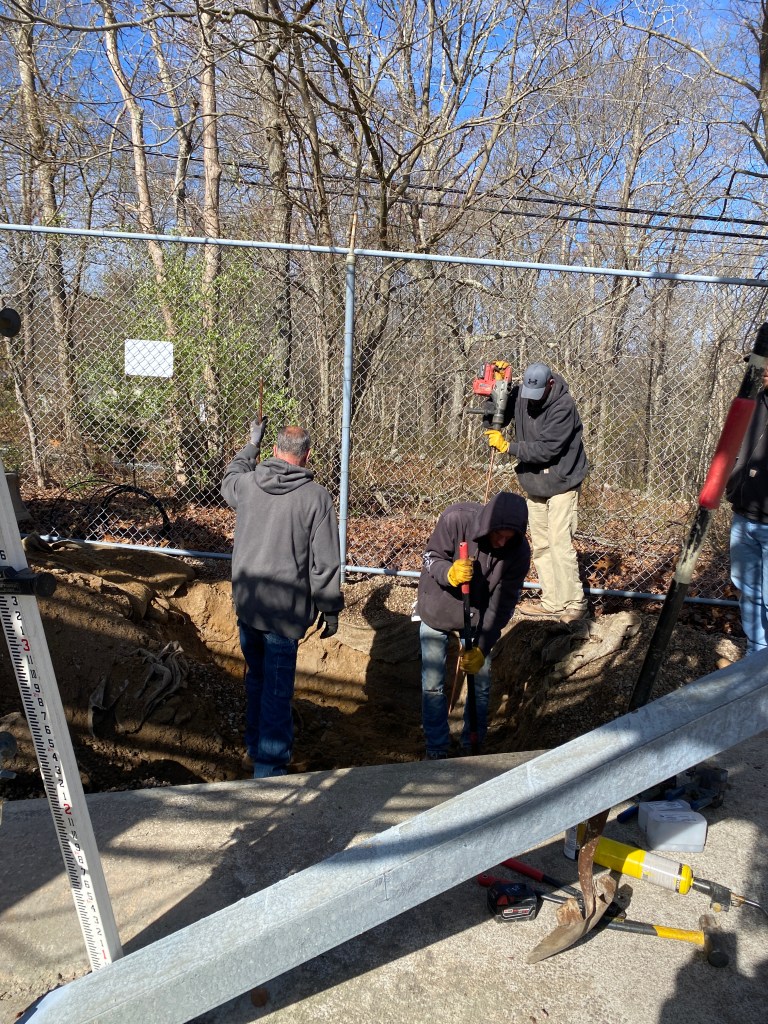
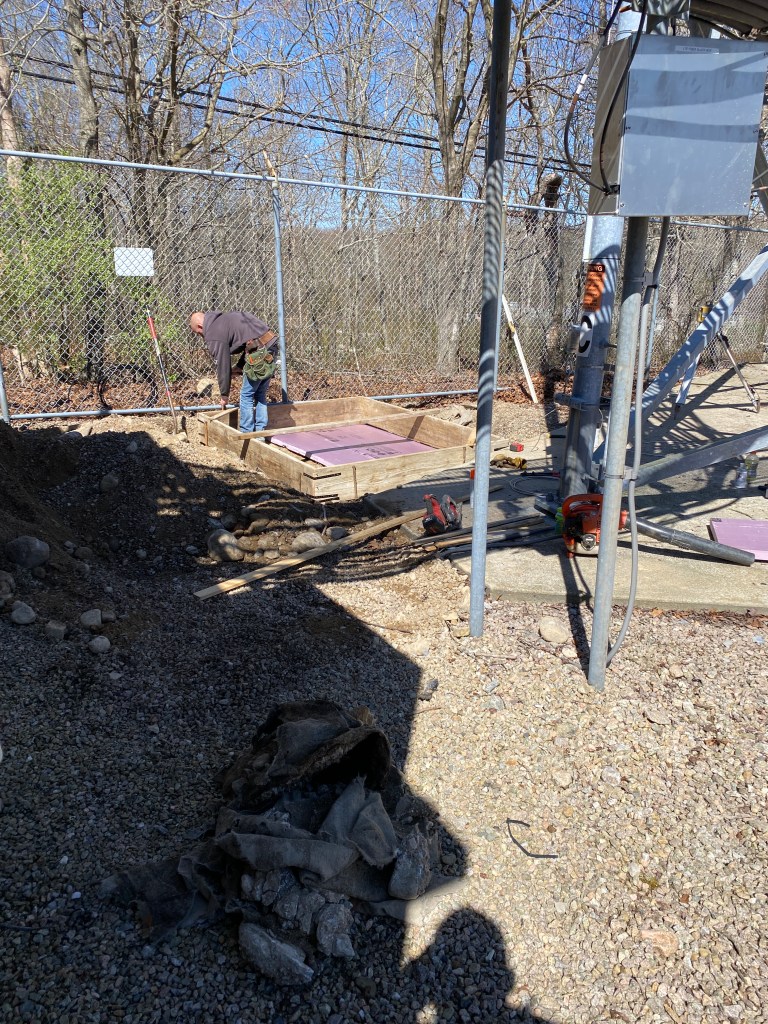
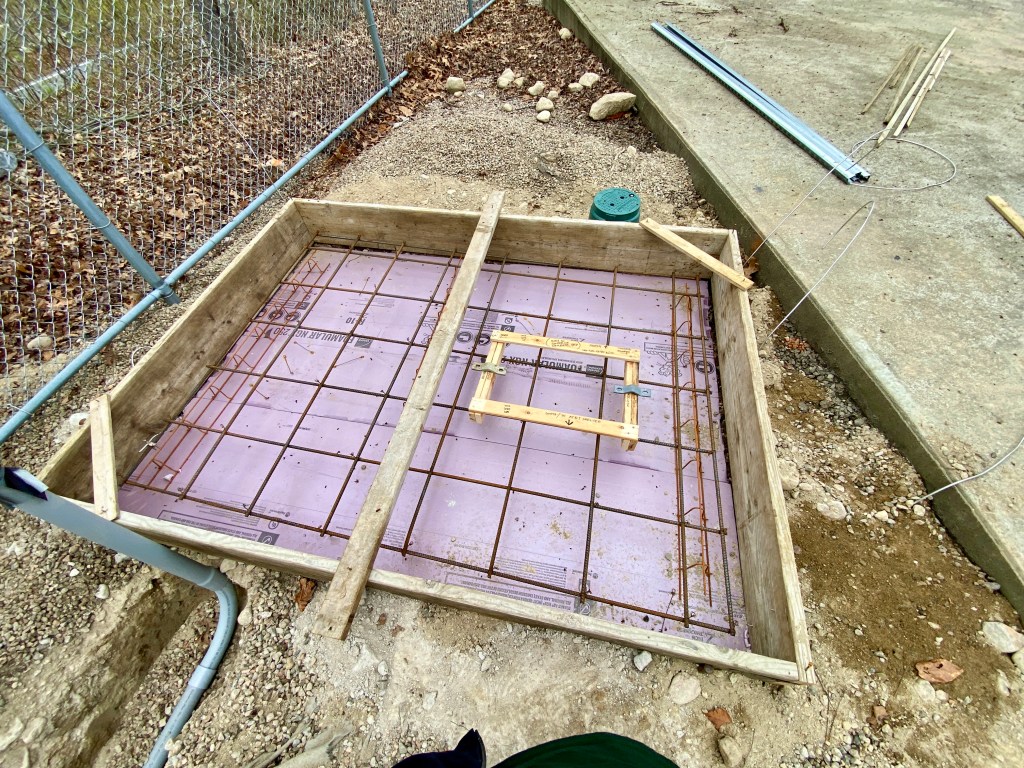
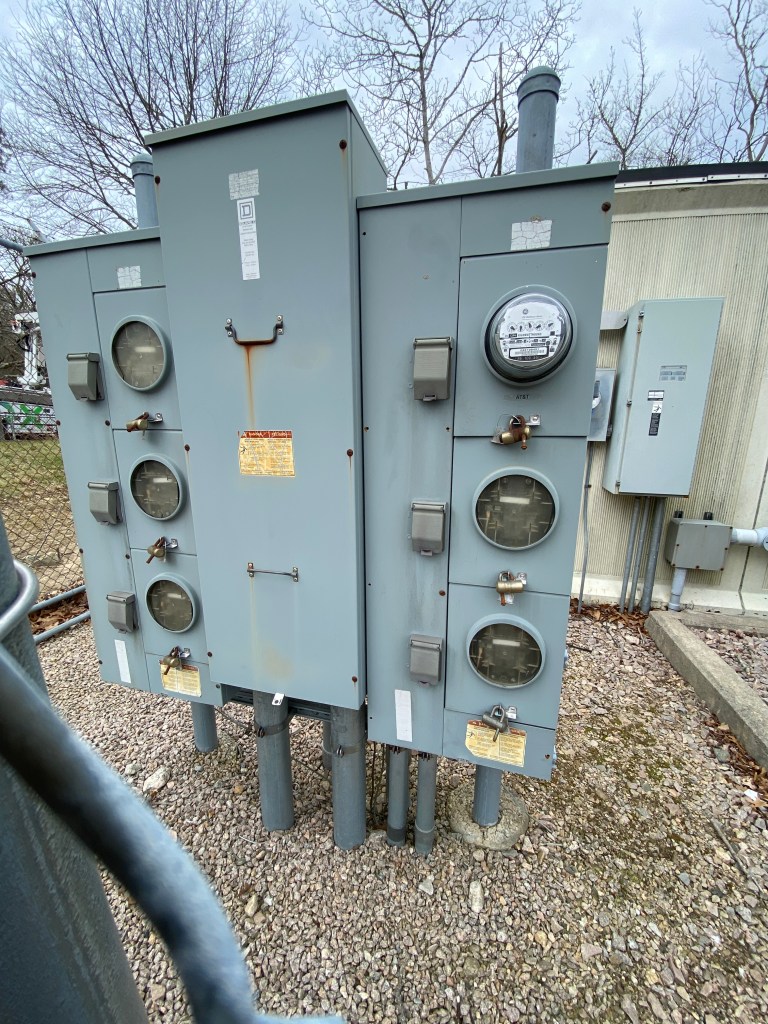
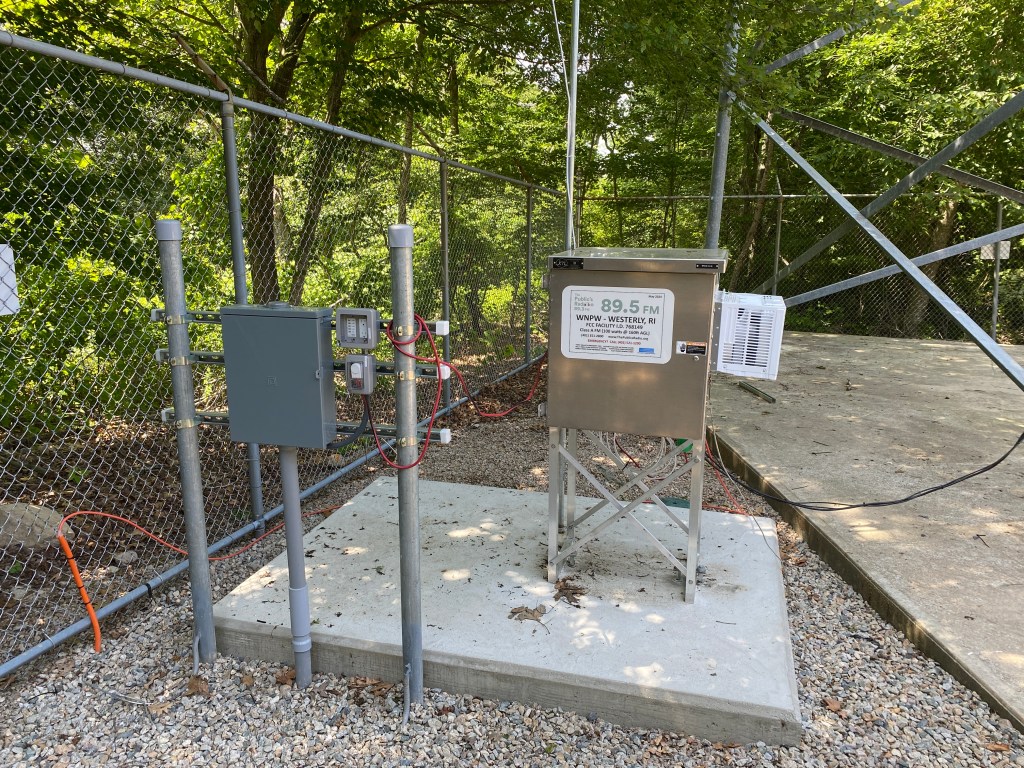
Soon after, we got an outdoor breaker panel and associated weatherproof outlets set up by the pad, and connected them to a conduit in the trench. It’s remarkable how invisible this was after they were done; that’s a 2 or 3 ft deep trench they dug and now you’d never know it was there.
While this was all going on, I had ordered all the transmitter and related equipment. And I was assembling and testing it all at the South Coast Bureau in Westerly. (I’ll come back to this) At the concrete guys’ recommendation, I waited five days and then hauled the whole cabinet (minus the UPS/battery backup to save weight) in my CR-V out to the site (thanks for helping, Alex!) and bolted it to the embedded lag bolts in the pad.
Later, in early June, Cox Communications came out multiple times to plan out, and then proceed with, taking a tap off the local cable line…which was halfway to the neighbor’s house…running our cable back to the street, down the pole, into a new trench (not as deep as the electrical one, though) to the fence, and then following the fence to about where our pad is. Then pulling the RG11 weatherproof cable through it all and to our weatherproof rack cabinet.
Last but not least, we were waiting on Rhode Island Energy to come out and plug a new meter into the socket, so I can close the breaker at the panel and presto! That was the last technical step needed. They were supposed to do that on June 10th but ended up not getting to it until June 21st. C’est la vie.
Since I thought I was gonna have power June 10th, I asked our lawyer to file the license to cover paperwork with the FCC, which they granted in record time (just a few days) and we technically were “on the air” on June 20th, even though I couldn’t actually do it until the 21st. Eh, close enough.
The Transmitter and Related Gear
Originally I’d hoped to get a proper shelter for WNPW but that proved highly problematic and expensive. The grounds for the tower are really inefficiently used inside the fence. I was told I couldn’t put anything bigger than a 6 x 8 ft pad. The 8 ft is probably true, but I could’ve eeked out more like 10 or 12 ft going the other way.
That would’ve made procuring a proper fiberbond or thermobond concrete shelter a lot more feasible. As it is, almost nobody makes 6 x 8 ft shelter, and even 8 x 12 ft is relatively uncommon. Usually it’s more like 10 x 16 or 10 x 20ft. There’s also the slight issue that even a used concrete shelter tends to cost about $15,000 to $25,000 dollars, plus another $10k to transport and install it…which in this case would’ve required an expensive crane. I did seriously consider Envirobuildings, but the extra costs associated with dealing with the osprey nest blew the budget for that. And I thought I might just get a Home Depot shed; they’re not terribly expensive to have delivered and installed for you (about $3000) but it’s a lot of work to add the insulation, sealing and drywall to adapt a shed for transmitter use. It’s a lot more work when you’ve got to air condition it and work hard to keep bugs and critters out of your expensive equipment. It would’ve more than doubled the cost and that, too, blew the budget.
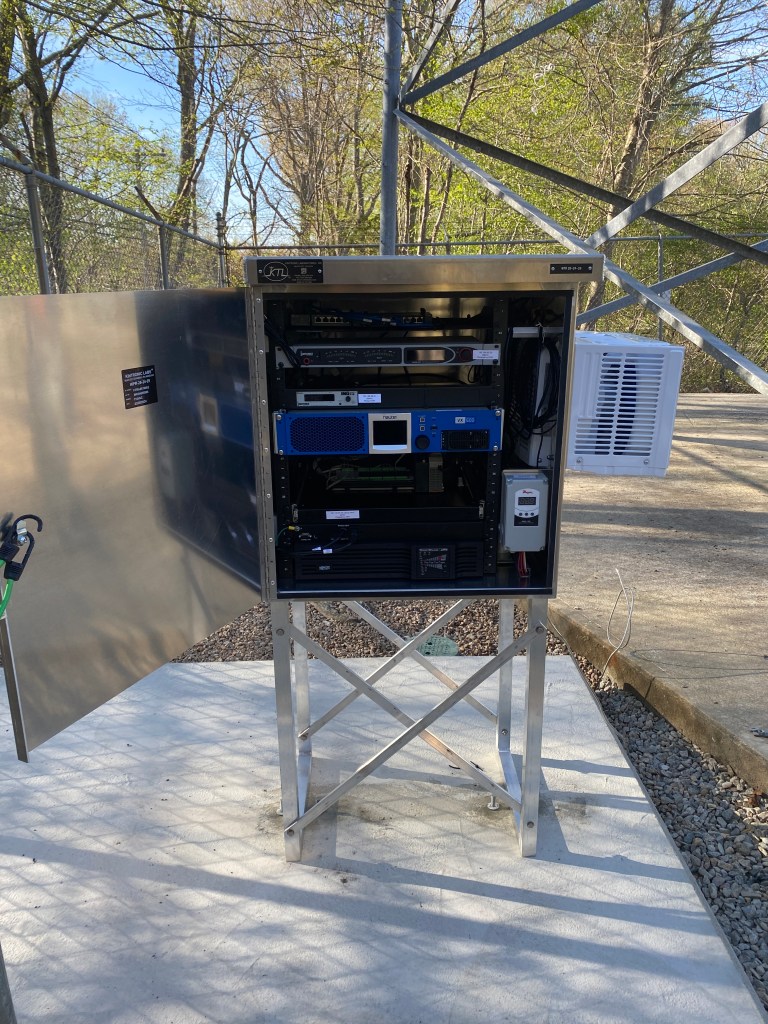
Ultimately I went with a Kintronic Labs’ Outdoor Rack Cabinet. They’re about $4000, and come with a built in heater and air conditioner. I have no illusions that this is going to last more than three to five years, but in that time we can fundraise some more to buy something better.
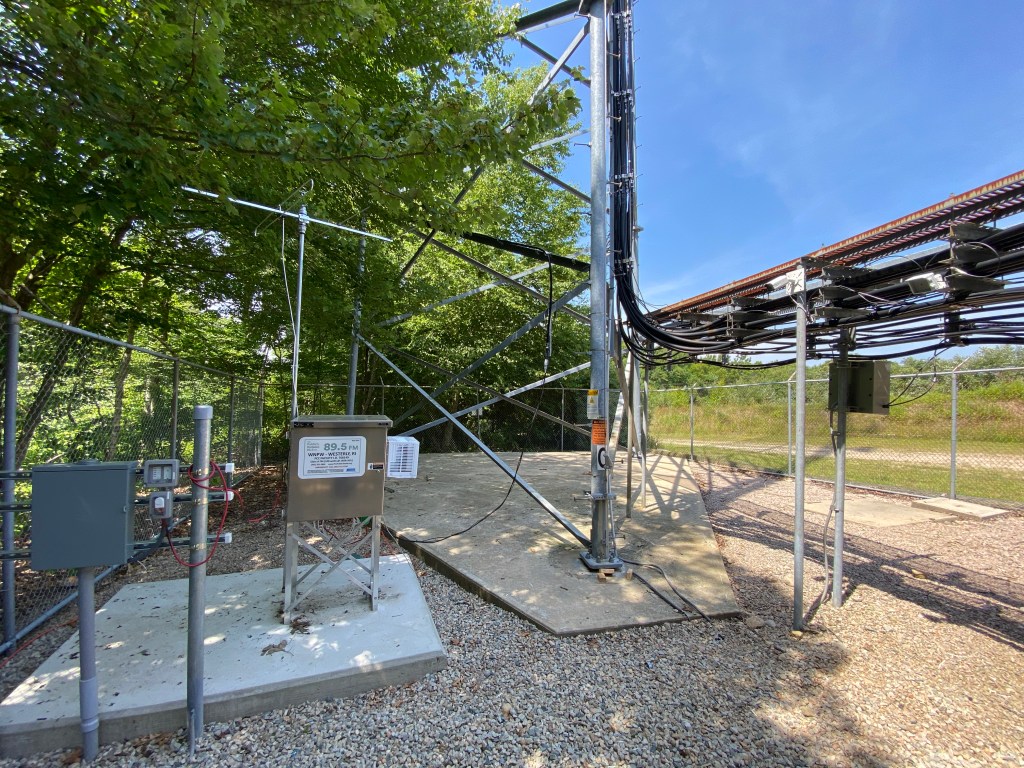

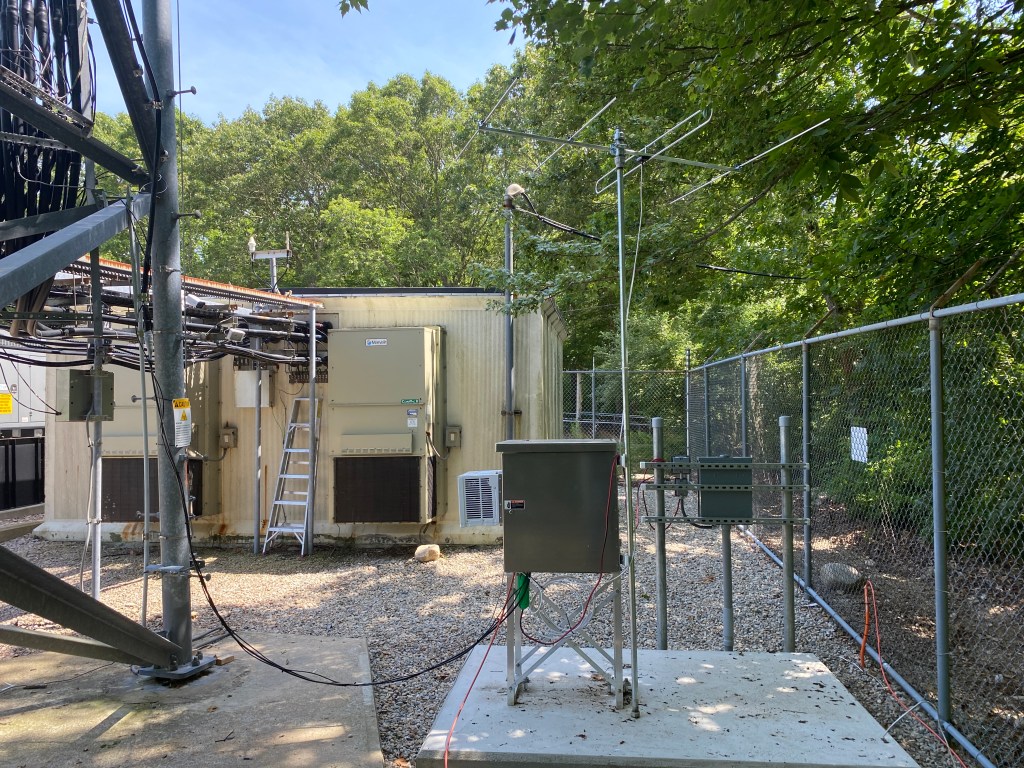
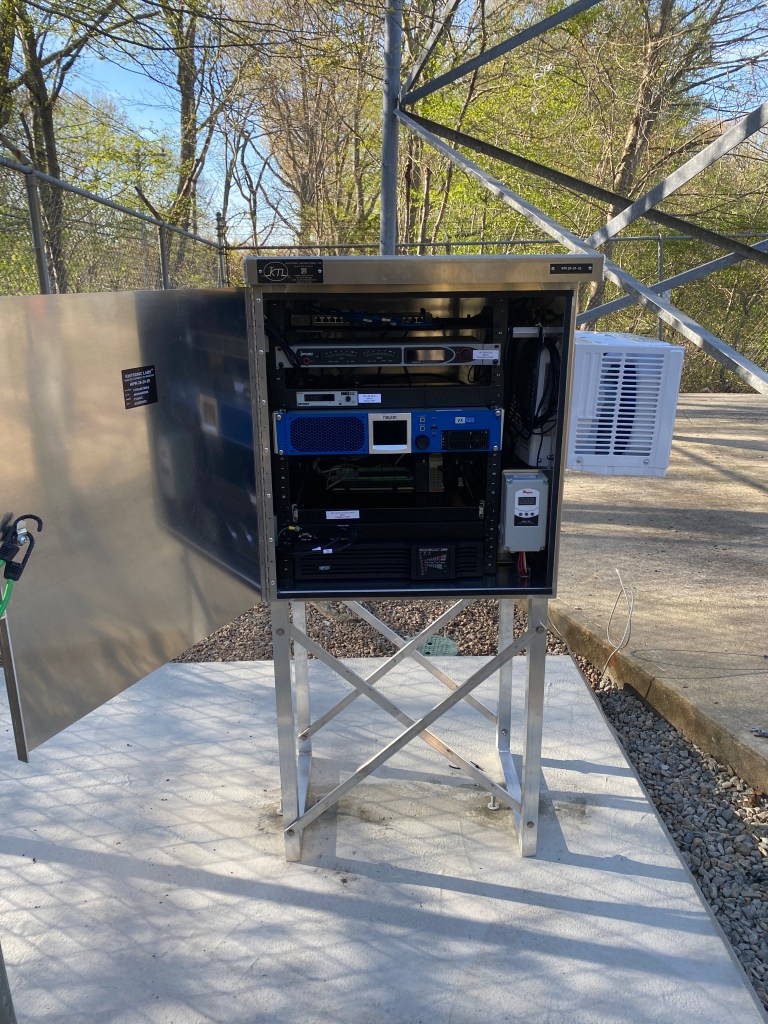
Since we were already a Nautel shop, I purchased a VX600 transmitter. Why get a 600w transmitter when I only need 120 watts? Well, the VX300 was only a few hundred bucks more than the VX150, and the VX600 wasn’t terribly more than the VX300, either. And at some point, some day, we might able to finagle more power…or a better antenna…for WNPW. When that happens, I might need a lot more TPO. Better to be ready for that day when and if it comes, especially since it was pretty cheap insurance.
The VX600 has a very slick HTML5 AUI (Advanced User Interface). I hope someday soon they’ll finally get that deployed at least to the GV series so I can put it on WNPN.
While the VX series is fully SNMP-controllable, in WNPW’s case I relied more heavily on the printed wiring board (PWB) connections to my remote control. The reason why is that I’m using a Control By Web X400 “heart” as the remote control here, combined with their X19S i/o unit. The X400 can be controlled by another SNMP Agent…like my Burk ARC Plus Touch back at the studios…but it can’t directly connect to non-CBW devices via SNMP. This way the X400 is largely a waystation for the Burk to monitor and control things, but if the internet goes down for whatever reason, it can still function on its own to manage things locally. I’ve been using a similar setup at WPVD for a few years now and it works quite well.
For our “studio/transmitter link” (STL), I have an Inovonics AARON650 receiver tuned to WNPE 102.7FM. The 650 is an amazing receiver, but even with with additional three-pole filtering of 89.5 from Microwave Filter Company, it can’t receive WNPN 89.3 while WNPW 89.5 is on the air. Works great when WNPW is off, though. The 650 also strips the RDS PI Code from WNPE and replaces it with the code for WNPW. If necessary, it can “fail back” to an http stream automatically or, via SNMP from the Burk ARC Plus Touch at the studio, be locked to the http stream. This also allows us to use the studio at the South County Bureau in Westerly to program WNPW independently from the rest of the TPR network, if desired.
An Inovonics 638 SiteStreamer provides remote monitoring ability from anywhere so long as the internet is working. I got an HD Sitestreamer instead of the FM-only 635 because I’m an optimist and someday maybe we’ll have HD Radio on WNPW. It didn’t cost all that much extra, either.
An on-site generator with automatic transfer switching ability was a pricey luxury we couldn’t afford for this project; I don’t even have a backup transmitter! But I was able to finagle an Eaton/Tripp Lite SU1000RTXLCD2U double-conversion UPS/battery backup and a PDUMH15AT automatic transfer switch. The former is a model I’ve bought several of and been quite pleased with the performance so far. The double-conversion is key; those are much better-made than the other Tripp Lite models, and by definition the power they deliver is much cleaner. The latter I got because I never trust a UPS too much. This way if the UPS croaks on me for any reason, it’ll instantly switch back to street power.
Last but not least, I have my little TP Link ER605 router and an eight-port unmanaged ethernet switch. TP Links have a lousy rep but it’s really not deserved; they’re delightfully cheap yet surprisingly powerful. The documentation is, however, a steaming pile of fail. Fortunately, I have a dozen of them and I’m used to how they work, so I don’t need the documentation as much. Like all my sites, I set up an IPsec site-to-site VPN back to the main studio. And I’ve got a little wall-wart-ish RE315 Wifi Access Point in there, too. It’s just to make it easier to work on things whilst sitting in the car on soggy days. (although the aluminum chassis of the cabinet really nukes wifi signal badly – but it’s good enough to get the job done)
How’s the Signal? The Rubber Meets the Road…
I have a reputation for being thorough and honest about signal performance; it’s part of the reason I got this job in the first place back in 2012. And I said from the beginning…both of this article and this project…that I was very confident we’d see a noticeable improvement in coverage vis a vis how well/poorly WNPE 102.7 covers Westerly right now. Which is to say: 102.7 works better than it should, but it’s not all that great. So I was pretty sure 89.5 would provide a superior listening experience for a lot of southwestern Rhode Island.
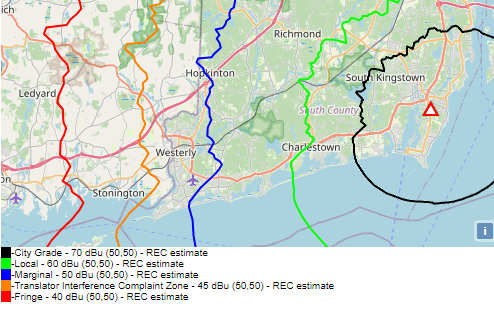
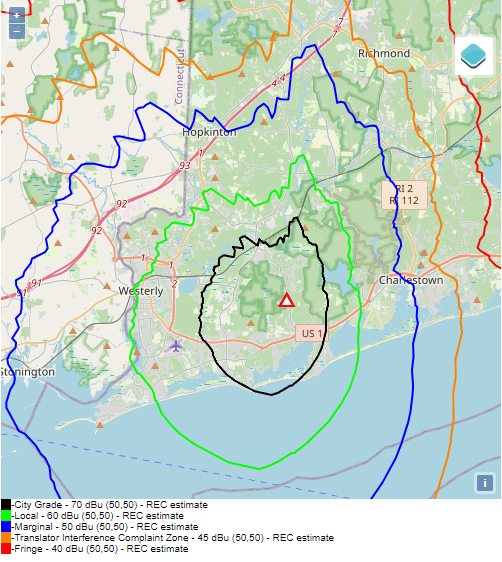
But I was very clear that 89.5 in downtown Westerly was going to be a gamble. Maybe it would work, but very possibly it wouldn’t work.
I’m “pleased” (???) to say that initial drive-testing seems to confirm my predictions. It’s nice to be right, but I kinda wish I was wrong on this one.
- Driving along the coast, from Watch Hill to Weekapaug, 89.5 was pretty good. A bit weak in Watch Hill proper but technically that is outside the service contour so you’d expect that.
- Driving I-95 through northern Westerly and beyond, it comes in pretty solidly to Exit 7 in Hope Valley.
- The rural parts of Westerly, like Bradford, are – unsurprisingly – quite well-covered. The proximity to the tower and the local terrain are quite favorable.
- 89.5 comes in surprisingly well eastward. I was able to hear it cleanly along Rt. 1 near Factory Pond (close to Perryville), and it was still fairly listenable all the way to Matunuck Beach Road. Unsurprisingly, the limiting factor here is WNPN 89.3’s upper-sidebands of HD Radio. The white noise that overwhelms 89.5 is very identifiable as such. Interestingly, I could catch pieces of 89.5 through the white noise as far away as Indian Lake in Narragansett. This suggests that if 89.3 shut off its HD carriers, 89.5 could cover a great deal of South County – which is impressive for a tiny 100 watt signal! (that’s not gonna happen, though)
- A lot of Pawcatuck CT gets the signal fine. Even parts of Stonington CT are surprisingly good. A broadcast colleague of mine reports he was able to listen almost to Foxwoods Casino up in Ledyard CT.
- Most of more “urban” parts of Westerly…especially Route 1 where all the stores / strip malls are…get pretty solid coverage.
- There does seem to be a bit of co-channel interference from WPKN 89.5FM coming up the coast. Almost certainly this is a seasonal summer atmospheric channel / ducting over Long Island Sound. There’s been a pretty regular such channel every summer that causes WNEW 102.7FM to blow away WNPE 102.7 out on Block Island, too.
- But the downtown area just isn’t all that great. Down by Wilcox Park, Main Street, High Street, Margin Street, etc? It’s listenable in the car, for the most part. Not solid, but listenable. There’s static but it’s not so bad that you’d tune away because of it. But that’s in the car. Almost any in-home radio can’t get even a whiff of the signal – the terrain just blocks it too much.
So What Next?
There’s not much I can do with WNPW directly, and definitely not at the moment. It pretty much is what it is. But there are some things adjacent to WNPW that we can try…
- We have construction permits to build WNPK 91.9FM and WNPO 88.9FM on Block Island. Either of which could be expanded considerably to try and improve their reach into Westerly. This is what WMNP and WCRI do, and it sort-of works but not all that well. I don’t think this will be terribly feasible, but it’s an option.
- We could purchase or trade for a better signal. WKIV 88.1 comes to mind. So does WBLQ 1230AM/103.1FM. (the irony!) I seriously considered abandoning WNPW and just trying to buy WBLQ. It’d be a shame to lose the existing broadcast service, true, but the signal was quite attractive…despite the looming issues with the tower. But initial discussions indicated it was going to cost twice as much to buy as it would to build WNPW instead. That ended up not quite being true, but was still a good 30-40% premium to buy vs build.
- The FCC is rumored to be planning on holding a filing window for new FM Class-Translator stations (possibly the whole 88 to 108 MHz band, but at least for non-comms in 88 to 92 MHz) sometime in 2025. Rumors are talk and talk is cheap, but if true that would hold much potential for us. Translators are licensed under much looser rules regarding contour overlap, so I could, conceivably, put a moderately-powered translator (on a different frequency) right on the roof of the South County Bureau in downtown Westerly and that would not only solve the reception problem, it would make for a handy “backup transmitter” / aux site for WNPW as well.

 L & R Broadcast Services
Leave a comment