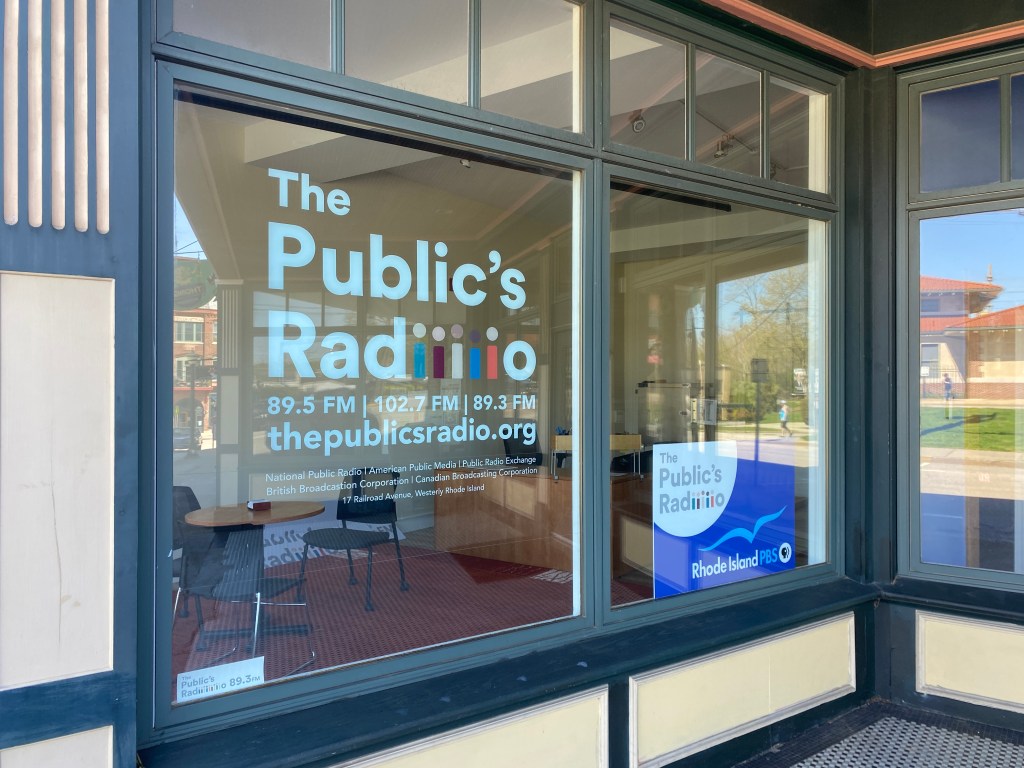
My day job (Chief Engineer of The Public’s Radio) has three local news bureaus across Rhode Island, each equipped with a small office space, a full-time reporter, and a soundproof booth for recording and live audio.


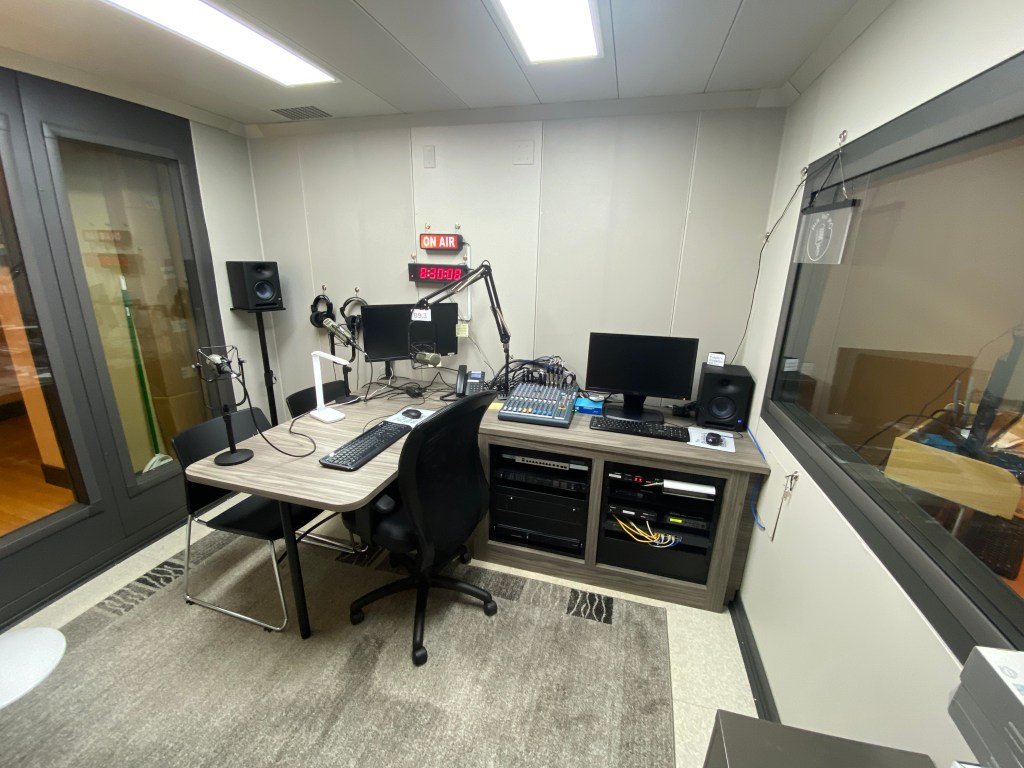
The bureau for “South County” (as RI’s Washington County is known locally) started in the United Theatre on Canal St in Westerly back in late July 2021. Unfortunately, depending a bit on how you look at it, our reporter assigned to the bureau, Alex Nunes, very quickly did a lot of really excellent reporting on fire districts and shoreline access; a hot-button topic in the region. And in the process, made some enemies. Including, it would seem, some people with influence at the United.
Fortunately, Chuck Royce, one of the lead benefactors of the United, is also a big fan of The Public’s Radio, and helped ensure the bureau could stay in Westerly. A new location was secured at 17 Railroad Ave (17RR), just around the corner from 5 Canal St, and the process was begun to move everything over in multiple phases:
Phase 1 – Set up the office
First things first: 17RR has to be functional as an office for Alex. That means we need to set up the following: keys to the doors, make the bathroom functional, set up at least one desk and chair, get some carpets and floormats in place, get the internet (Verizon FiOS in this case) and wifi set up, and put a few signs in the windows. This was all done in March and April of 2024.
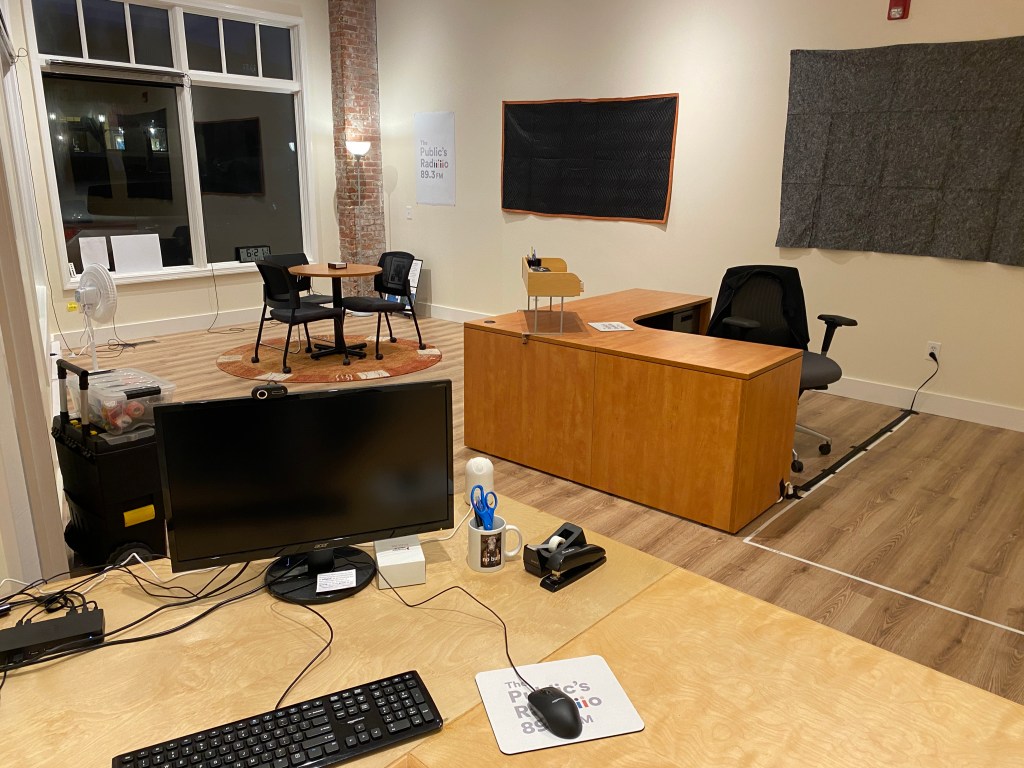
In our case, I also used a corner of the room as a staging area for the outdoor rack cabinet for WNPW 89.5FM, which was also being built along this same time. This ended up being a bit of a dodgy idea, as getting the fully-loaded cabinet into my Honda CR-V and in-place at the tower proved to be quite the trick. But, live and learn.

With that set up, Alex now had an office to work out of, and a place to meet with sources, interview guests, etc. But he doesn’t yet have a place to actually record audio yet. For that, we need the Wenger booth.
Phase 2: Moving the Wenger Booth
Moving the Wenger SoundLok booth requires far more effort, and for several reasons:

- It’s modular, but it’s only barely portable. You really need to hire Wenger to disassemble, transport, and reassemble it (and you definitely need to do so if you want to keep the warranty intact).
- Getting on Wenger’s calendar is a challenge. We had to book three months in advance.
- The new space requires a licensed electrician set up the special connector the booth uses for power. You can’t simple use an extension cord, as the booth has its own outlets and permanent overhead lighting. Using an extension cord is not up to code.
- Similarly, we had to get our landlord’s telco guy to pull several new CAT6 cables to specific locations and he was booking months in advance, too.
- A lot of review of the building’s plans was needed to ensure the floor can handle the weight of the booth. Most floors can, but this is not the kind of thing where you want to wing it.
The week before the booth move, your Intrepid Engineer had to disassemble all the studio equipment and furniture inside the booth, and roll it down the street to 17RR. Fortunately this only took a few hours, as the custom furniture I commissioned included two metal half-racks on casters welded together. It was meant to make it easy to pull everything out to install/remove equipment from the racks, then roll them back under the countertop. But it worked just as well as a means of easily transporting a lot of the hardware.


Finally, on May 29th, the day arrived: the Wenger crew was on-site, bright and early, and immediately began breaking down the old booth and removing it from the United Theatre.




You might note there’s a slight depression in the floor where the booth was. That’s to accommodate the soundproof floor, which “floats” relative to both the rest of the booth and to the actual building’s floor, too. It helps provide a lot of additional soundproofing.
This would prove problematic at 17RR because there’s no means of making a “hole” in the floor like that over there. Still, we made it work.


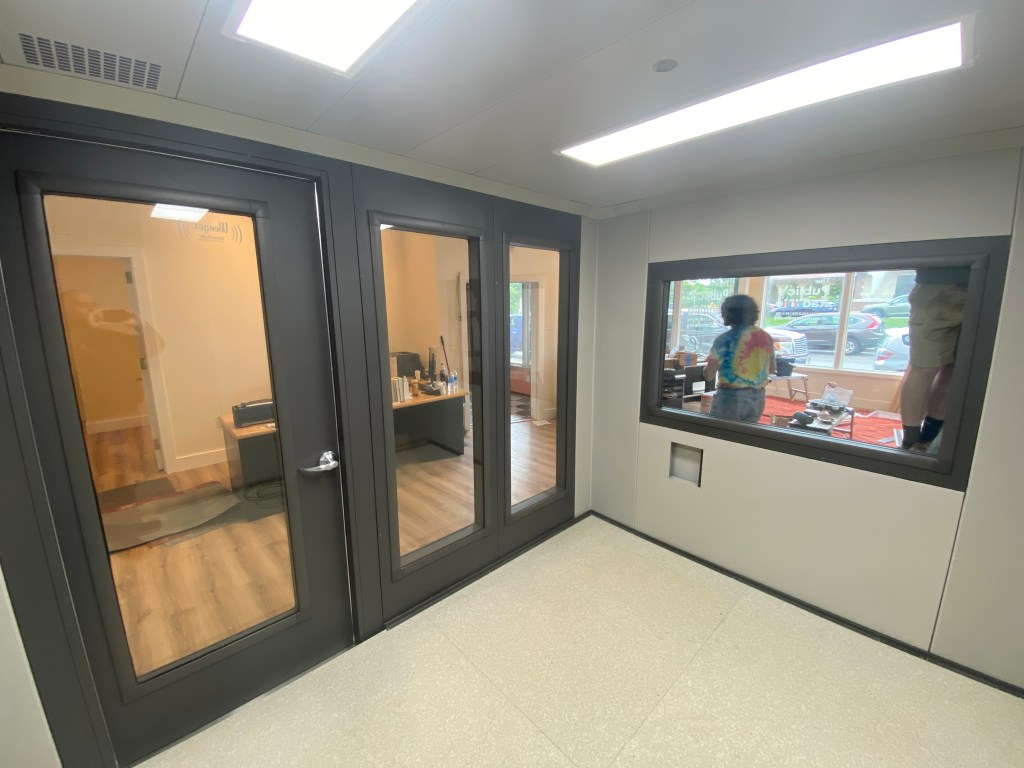


Ultimately there is a 2in “step up” to get into the booth. It’s not ADA compliant, so we’re ordering an aluminum transition edge-rail (to help reduce people tripping) and a portable wheelchair ramp for when necessary.
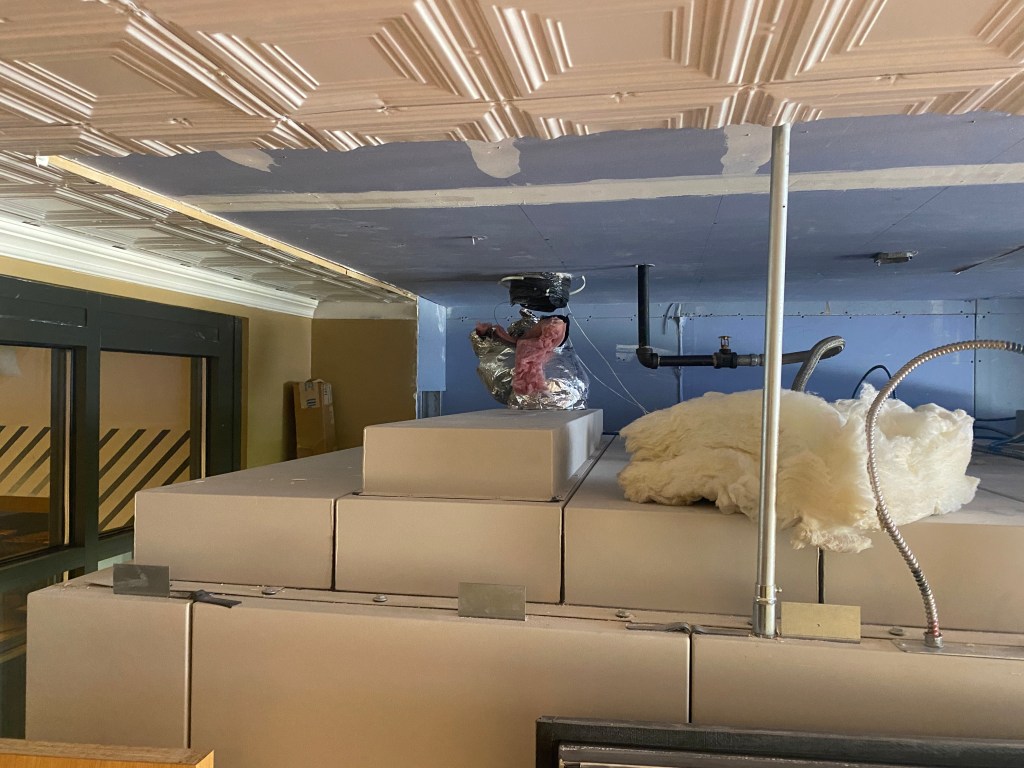
It actually took the Wenger contractors all day Wednesday and about five more hours on Thursday to do all the installation and then the cleanup. I was able to get a lot of the studio equipment reinstalled within a day, although the CAT5E cable I put in before they installed the ceiling (when it was accessible via a simple ladder) inexplicably failed completely on me. So I had to haul myself up onto the roof of the booth and crawl around to run a new CAT5E.
While up there, I took the opportunity to install a pain of 8in 500CFM duct fans into the intake/outflow (baffled) air vents in the ceiling of the booth. There were insulated ducts connected directly to these vents while at the United, but there’s no means of doing that here. We’re already finding it’s not really enough; the existing HVAC doesn’t put enough chilled air over the booth for the vent fans to suck in and circulate inside the booth, so it gets toasty in the booth; fans can only cool down to about +10F degrees above ambient. So if it’s 70F in the room around the booth? It’s 80F inside the booth. Yuck. We have a plan to extend a floor vent up to there to help with that.
Phase 3: Backup Air Studio
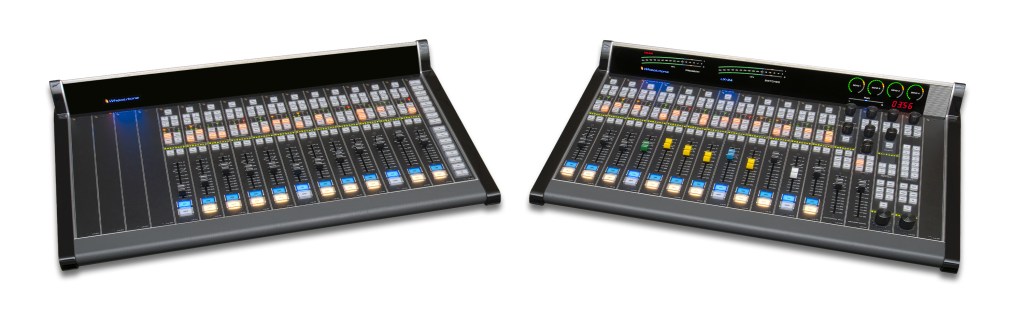
The next and final phase is to install a Wheatstone LX24-1212 Wheatnet-based Audio-over-IP system, replacing the existing Allen & Heath XB-14-2 analog mixer. And to install an Enco DAD radio automation & live-assist playout software, and network it back to our existing DAD systems in the 1 Union Station main studios.
I’ve already, for a few months now, been testing an APT/Worldcast IP Codec running linear audio (“1411kbps”) with two channels from our satellite dish facility at 1110 Douglas Ave. That’ll be our live audio feed from NPR and the BBC. It runs almost entirely over Verizon FiOS at both ends, and for a consumer-grade internet service, it’s actually quite reliable. Almost as good as enterprise-grade fiber.
The idea is that the Westerly booth can function as a backup air studio. Either for the entire TPR network, or for WNPW 89.5FM alone…making it capable of airing programming independent of the rest of the network.
It’ll also be something of a handy “test run” to allow me to tweak and adjust my approach to using Wheatstone for when TPR inevitably moves out of 1 Union Station and into the (renovated) space for RIPBS at 50 Park Lane. Our elderly Logitek JetStreamMinis (they still run Windows 7!) will be replaced by a full Wheatnet architecture.

 L & R Broadcast Services
Leave a comment